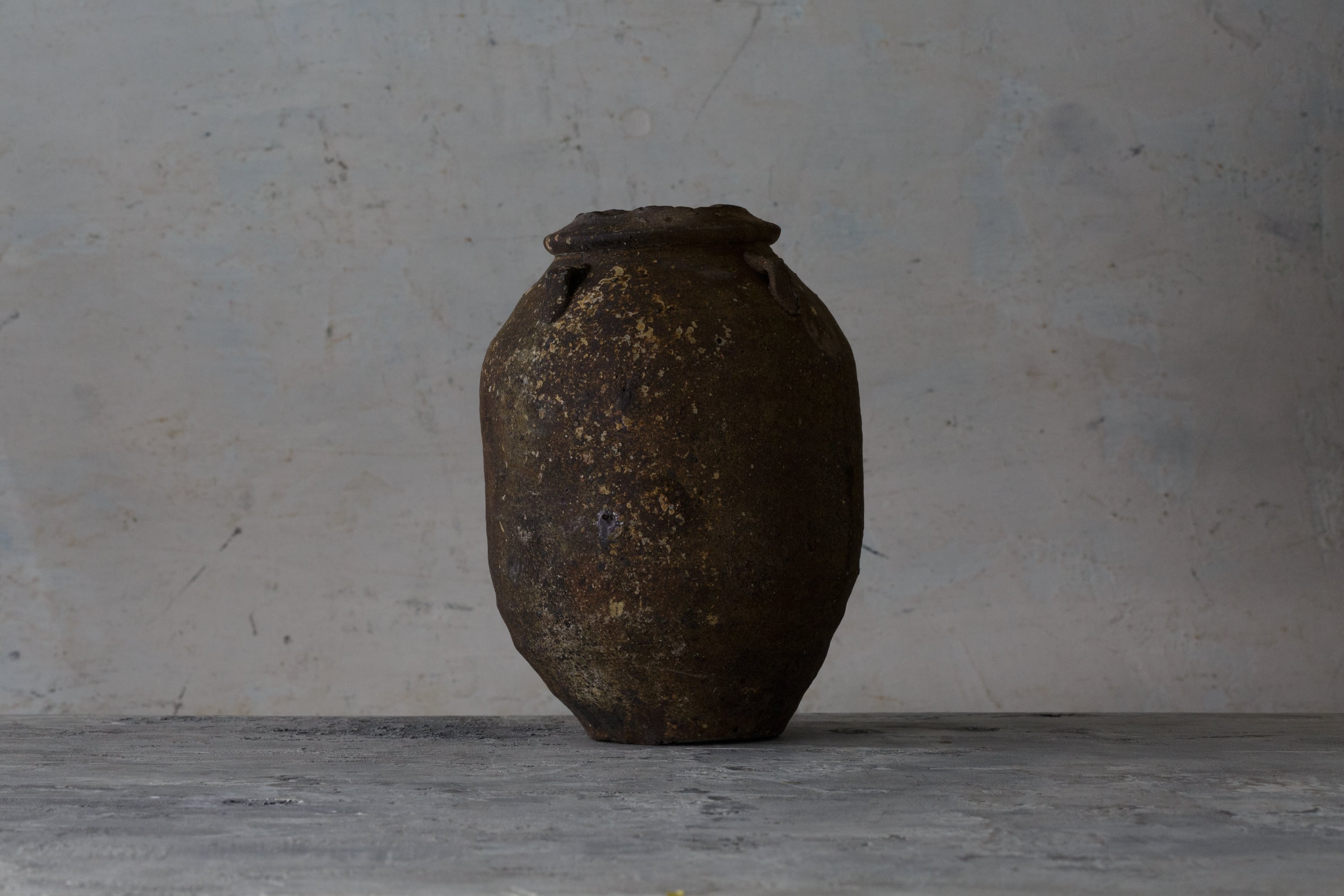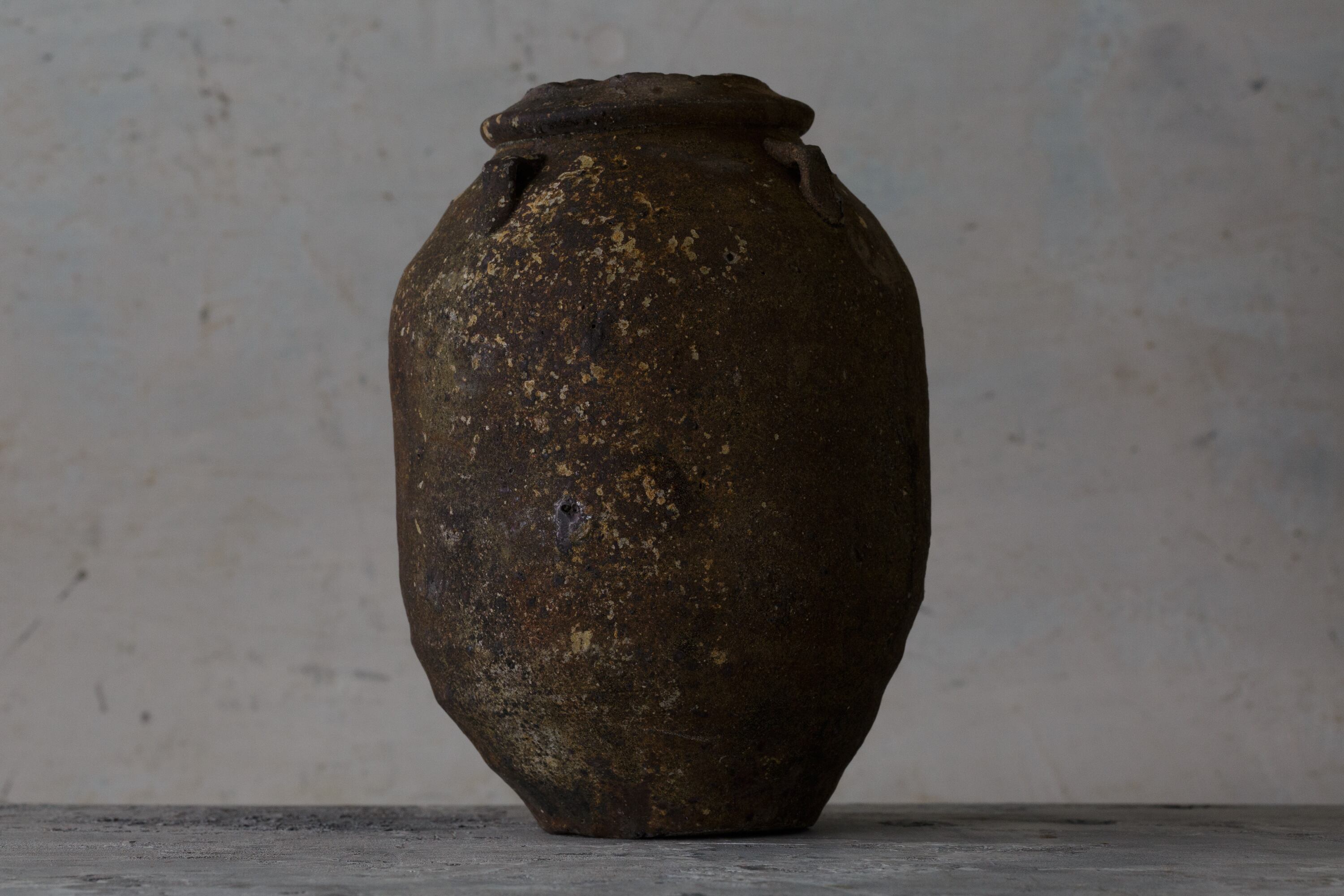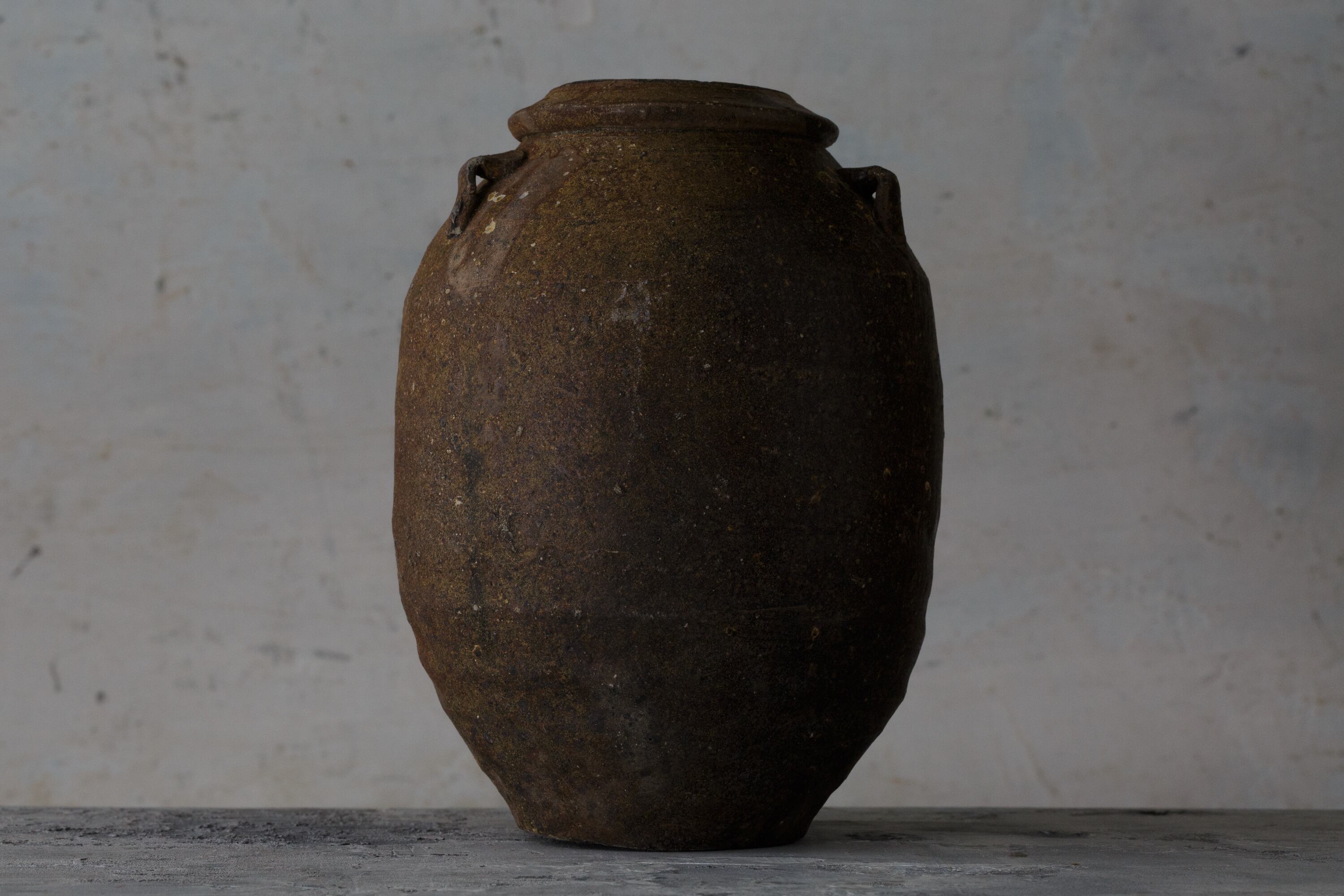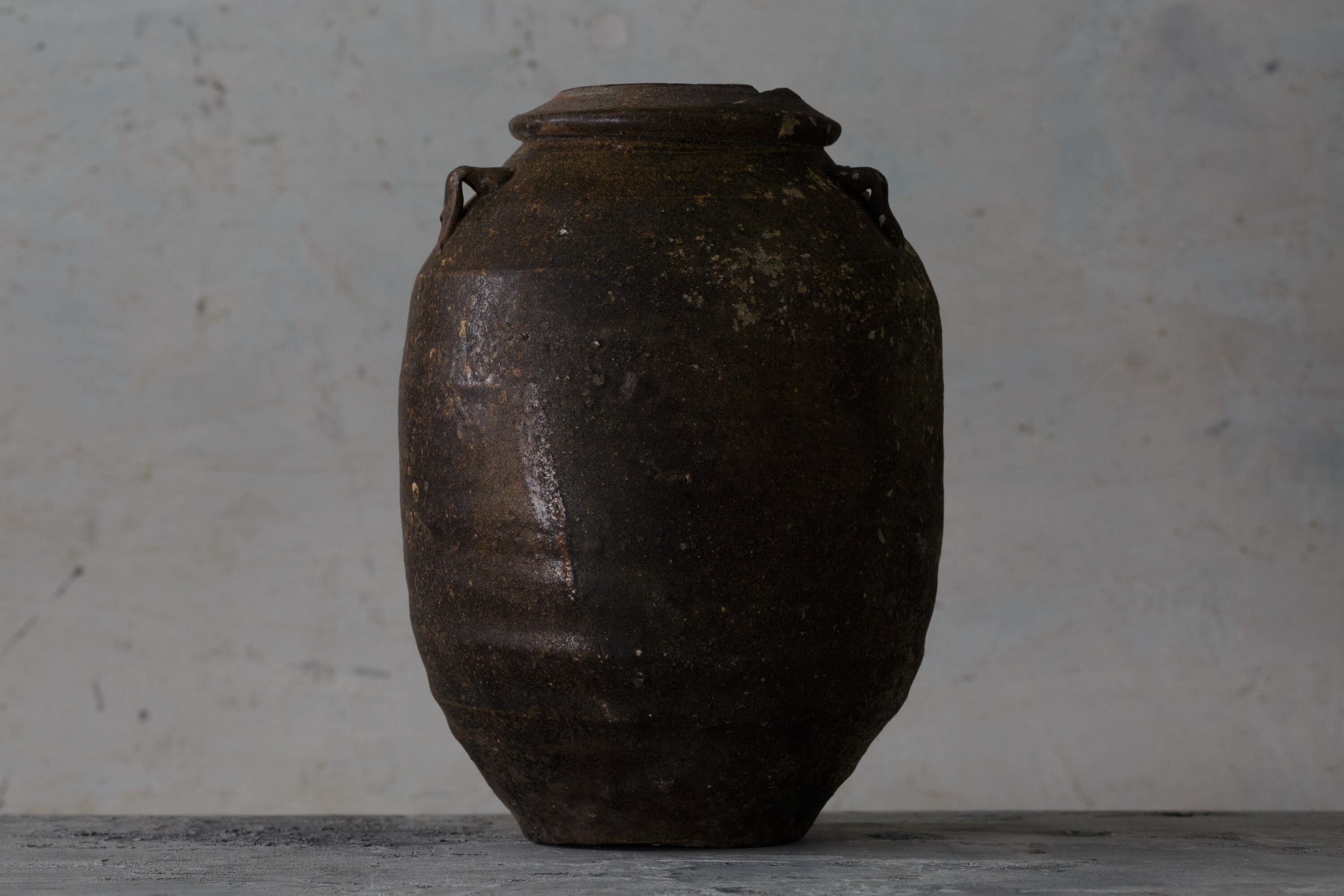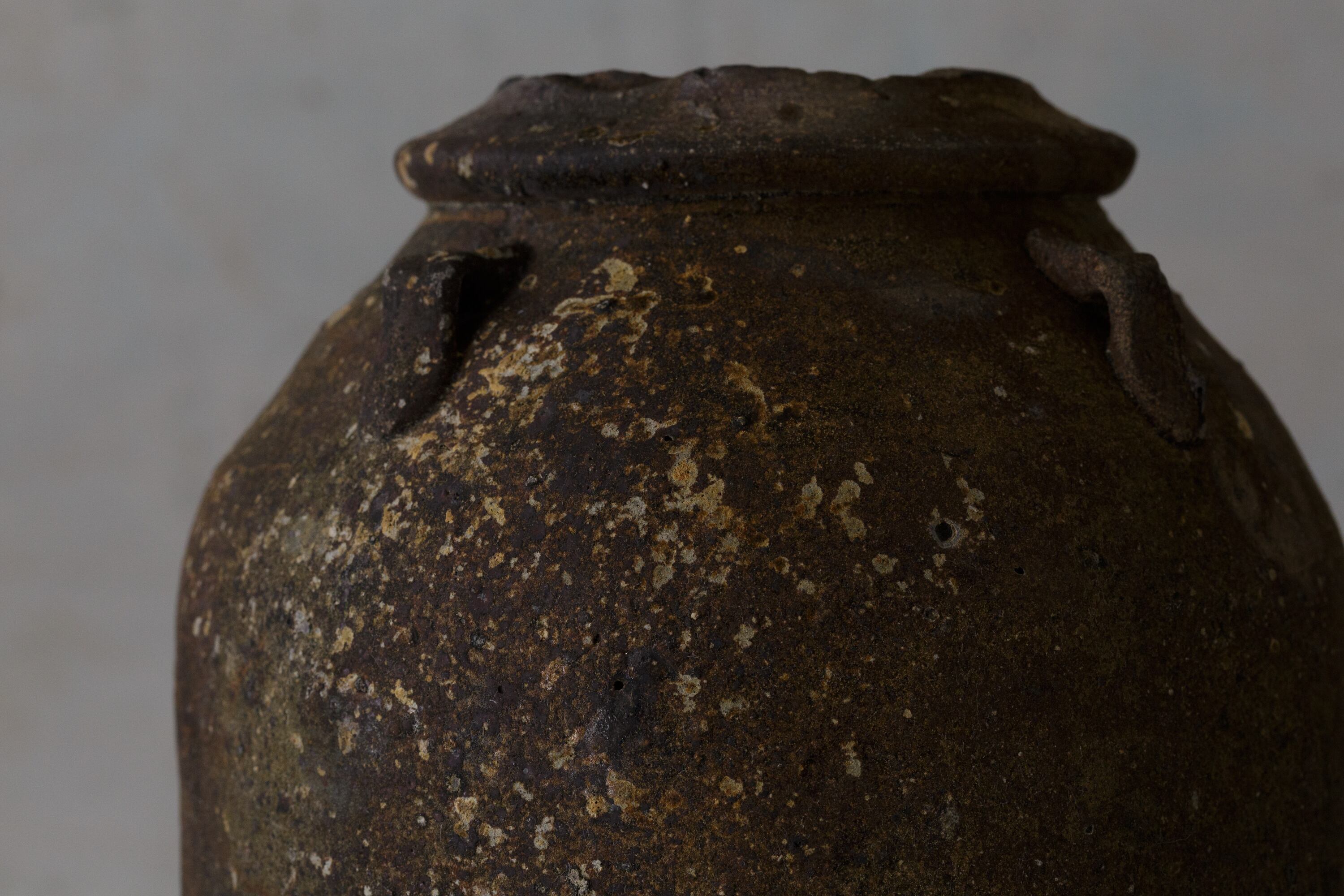
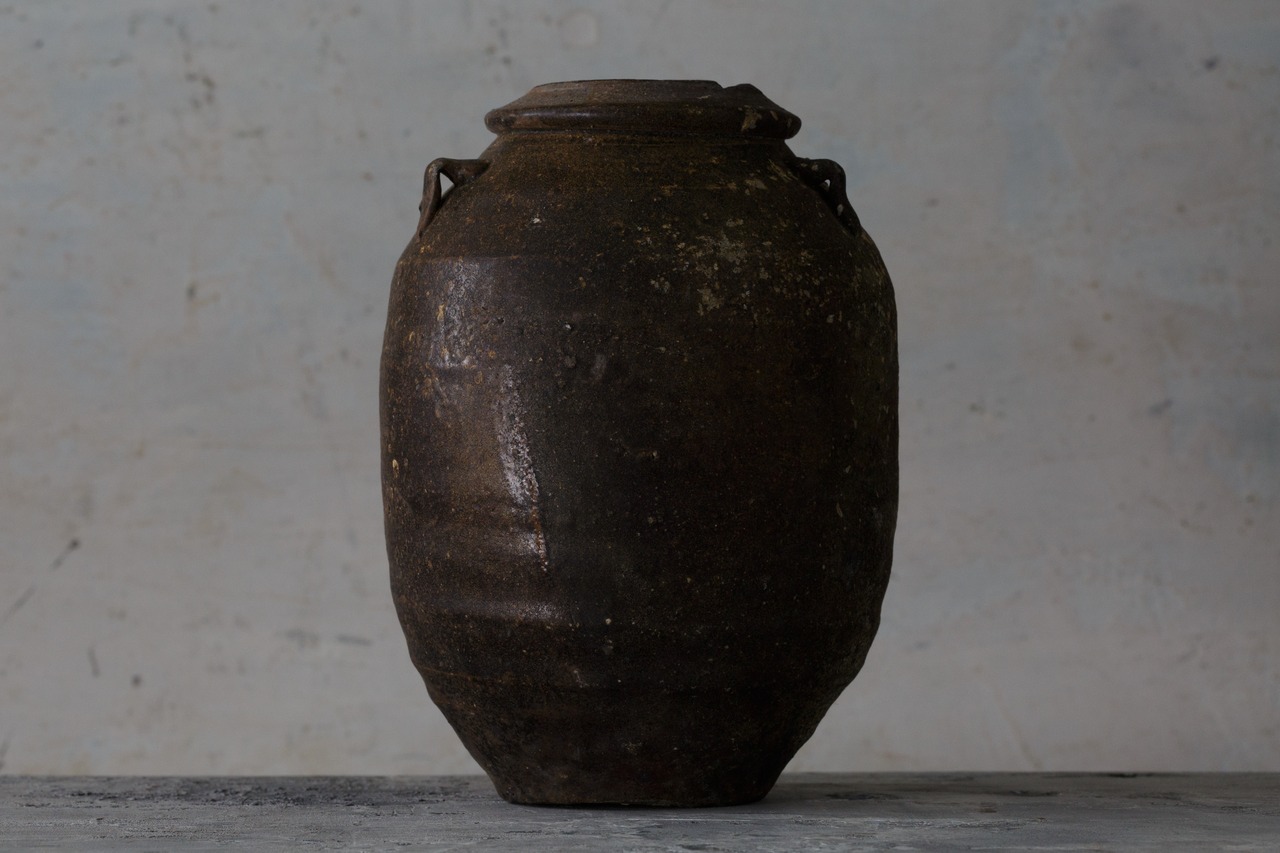
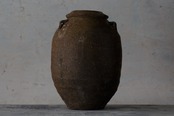
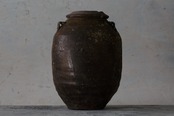
Antique Nanban Three Lug Stoneware Jar, Dark Fired Storage Vessel, Southeast Asian Ceramic, 18th–19th Century 古南蛮 焼締三耳壺 暗褐色焼締貯蔵壺 東南アジア系古陶 18〜19世紀頃
JPY290,000(USD1,830.06)
残り1点
International shipping available
A quiet vessel shaped by fire, earth, use, and time — an old Nanban jar whose dark surface preserves the traces of an unknown journey across Asia.
火と土、暮らし、そして長い時間がつくり上げた静かな器。暗褐色の肌に、海を越えて伝わった古南蛮の記憶を残す三耳壺です。
Product Details
Item: Antique Nanban Three Lug Stoneware Jar
Origin: Possibly Southeast Asia or Southern China
Style: Nanban type / Southeast Asian trade ceramic
Usage: Originally likely a storage vessel; suitable today as a decorative vessel, flower vessel with an inner container, or collection piece
Material: High fired ceramic / stoneware
Manufacture Period: Possibly 18th–19th century; exact date undetermined
Mark: No identifiable kiln mark or artist signature
Condition: ★★☆☆☆
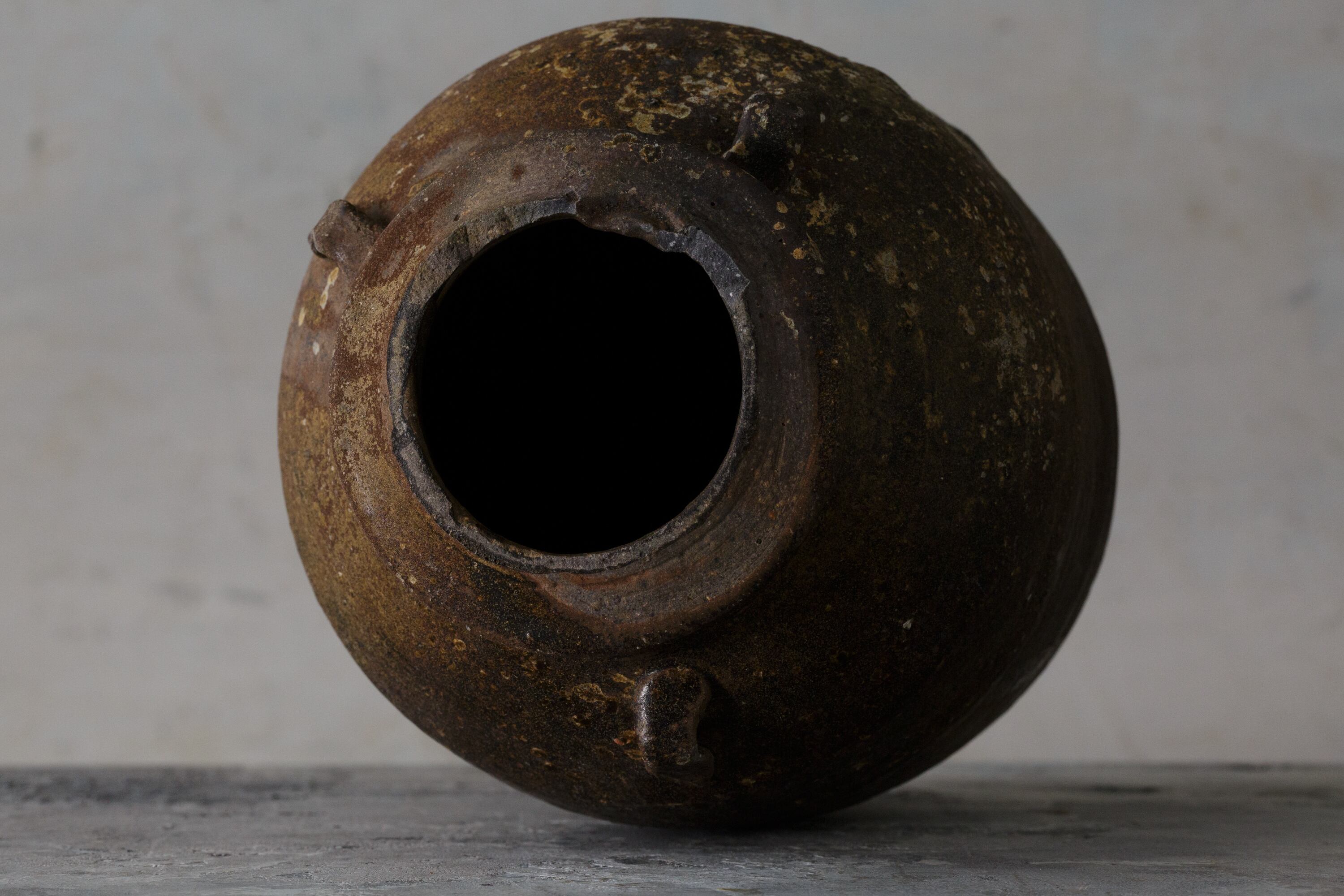
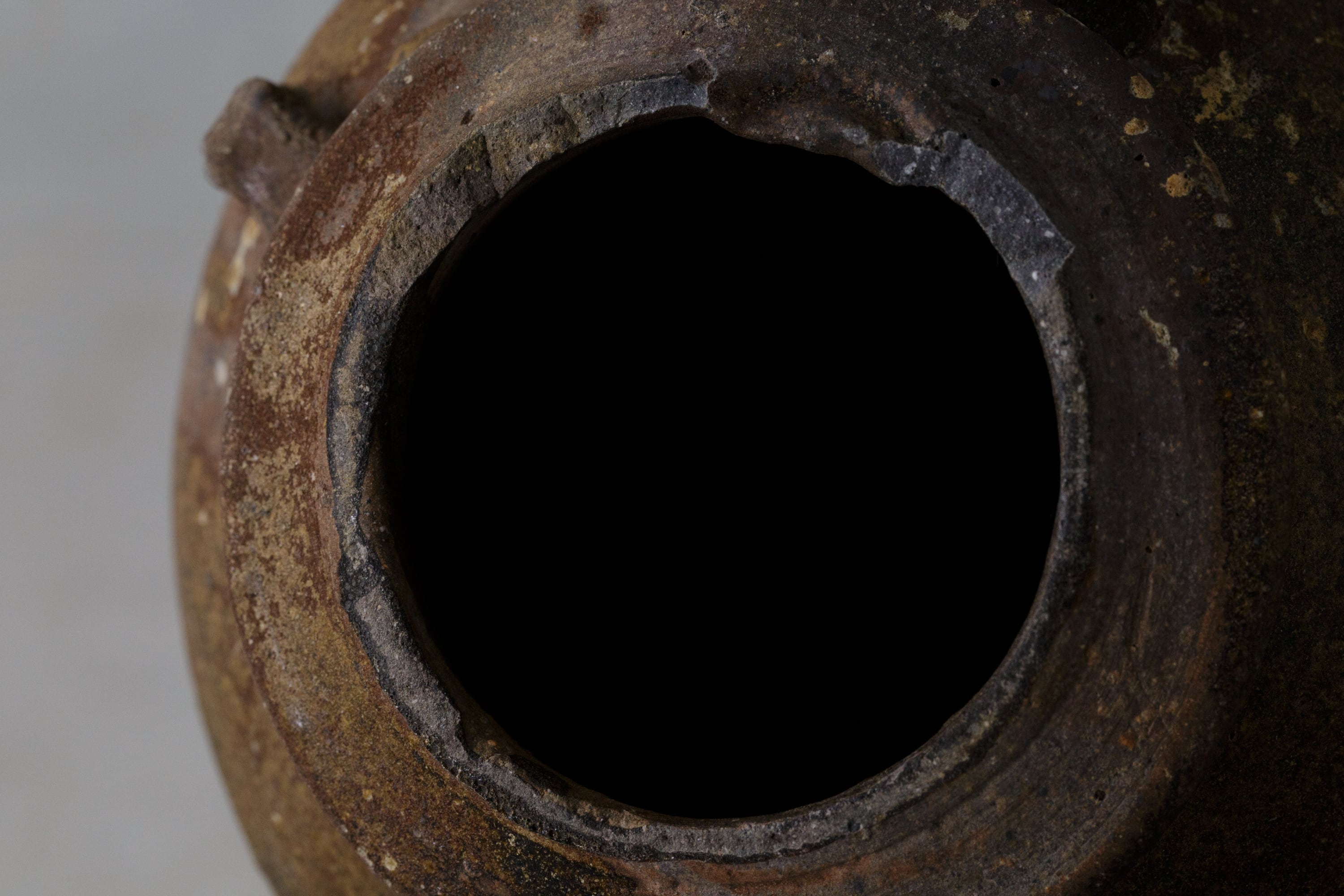
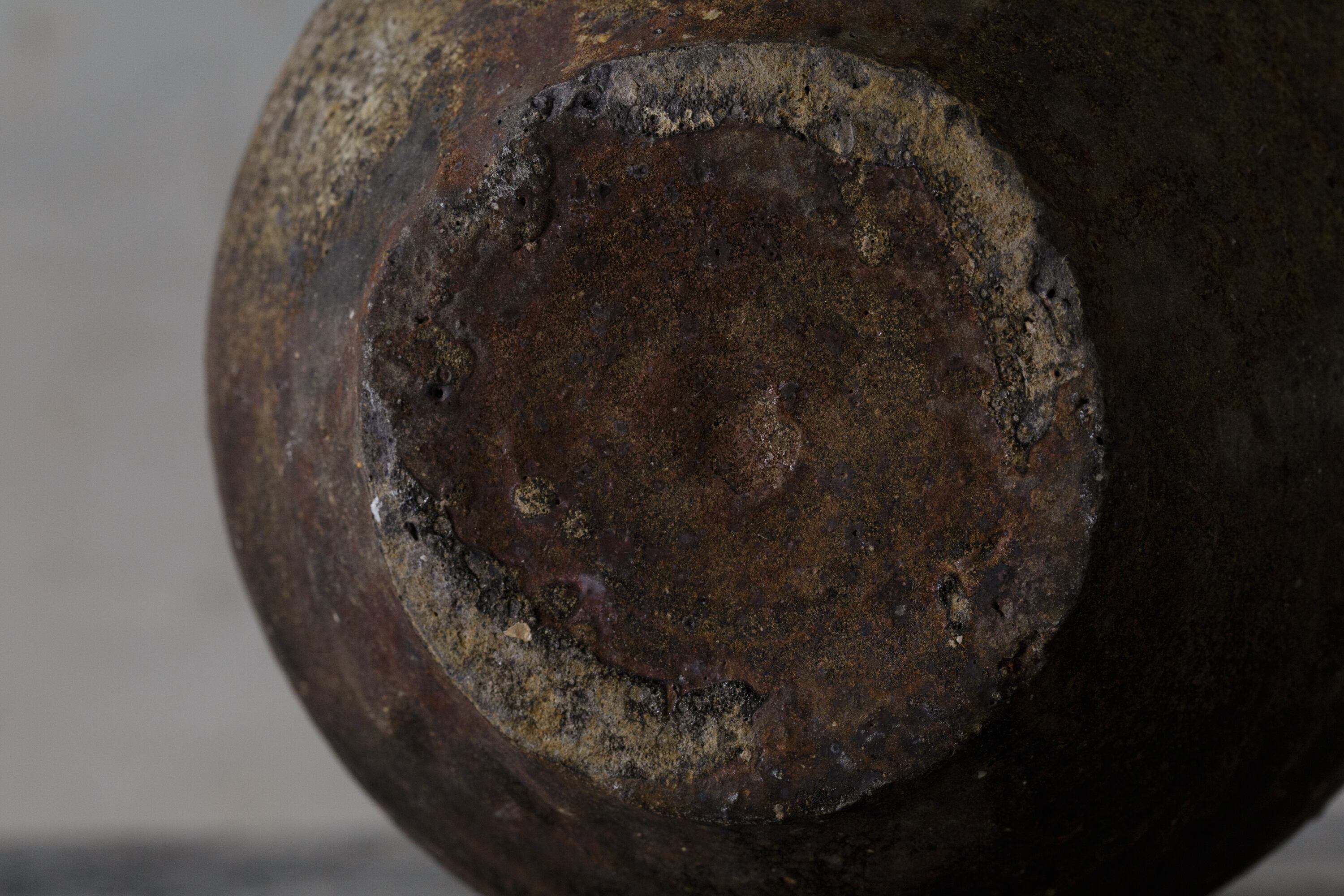
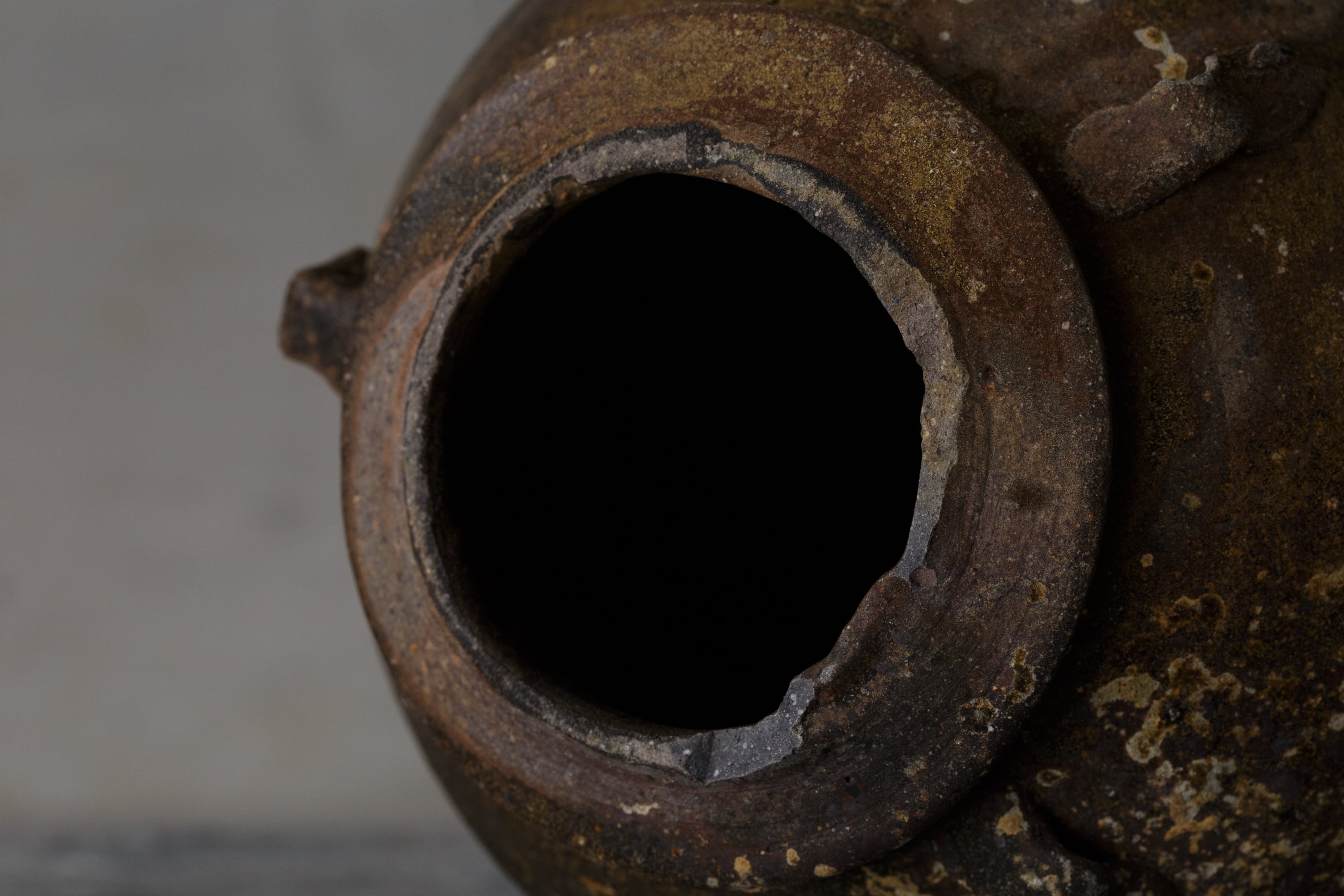
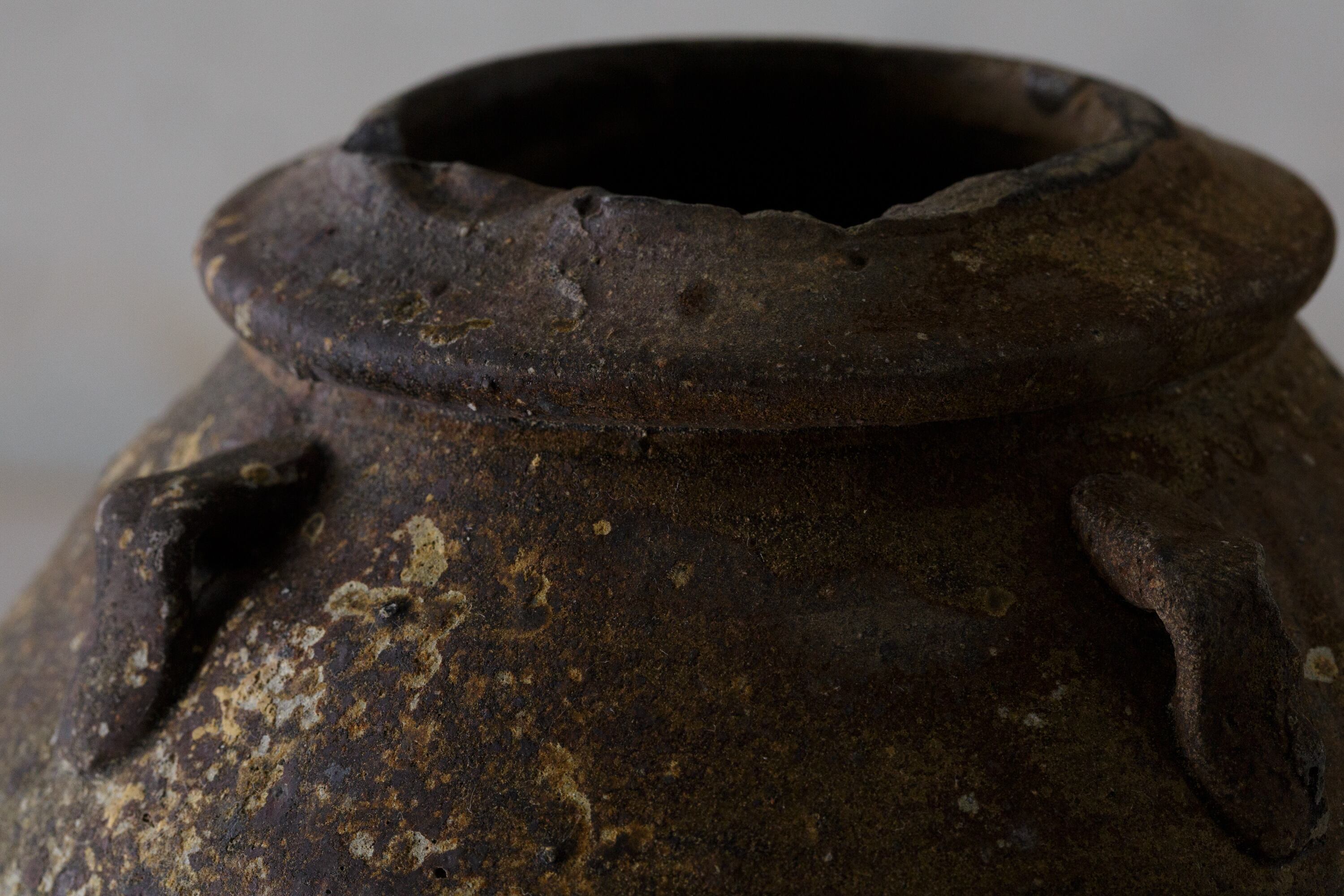
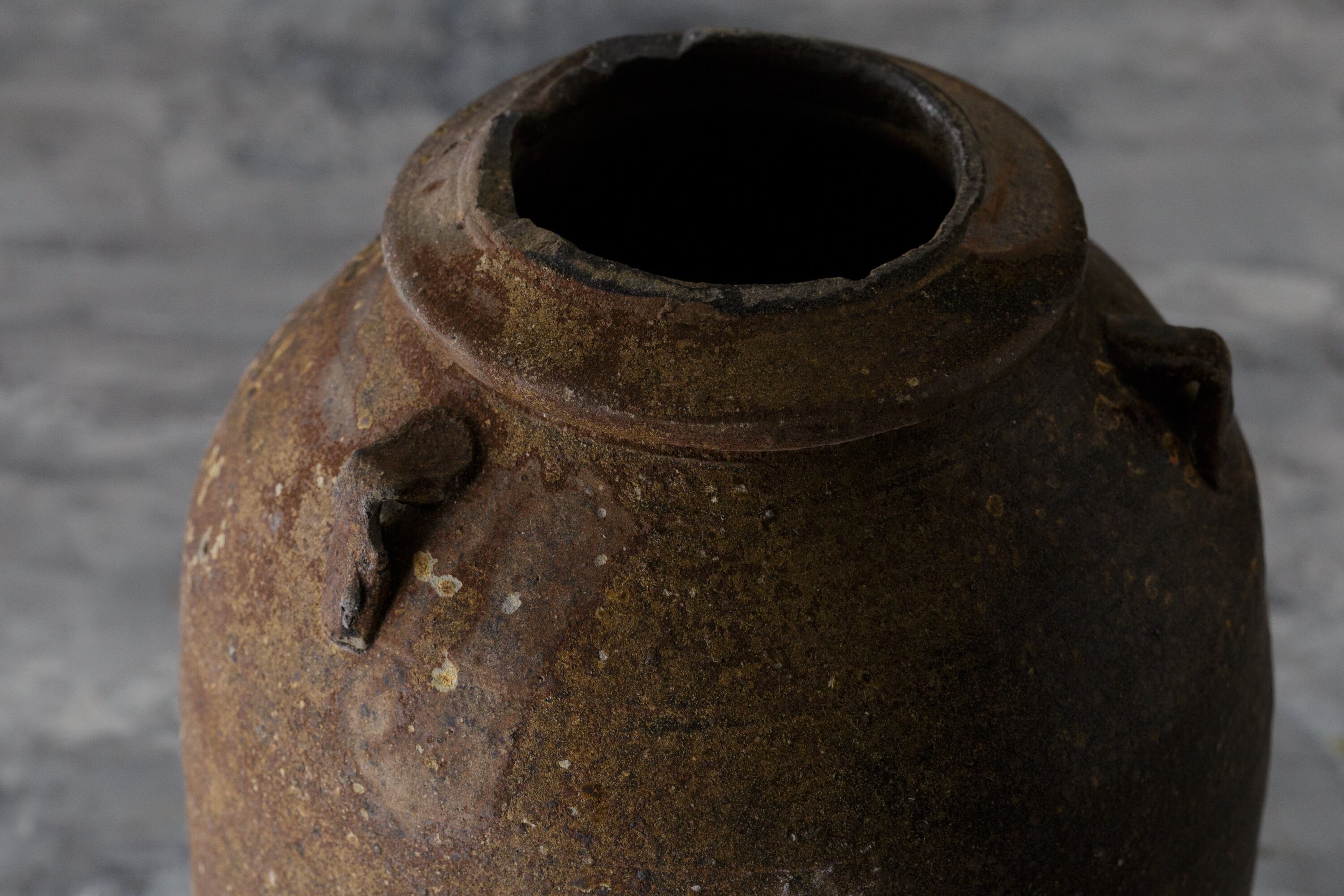
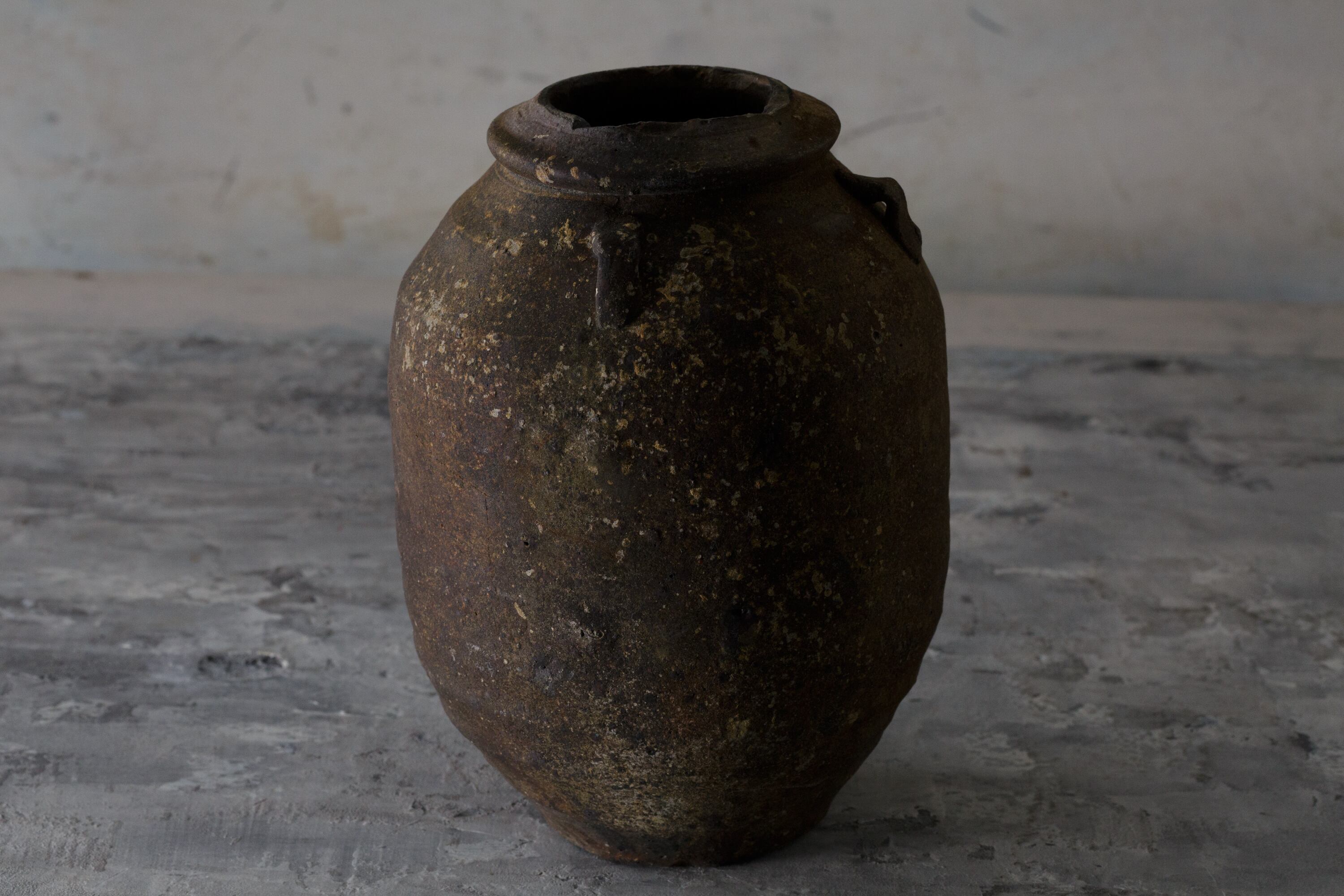
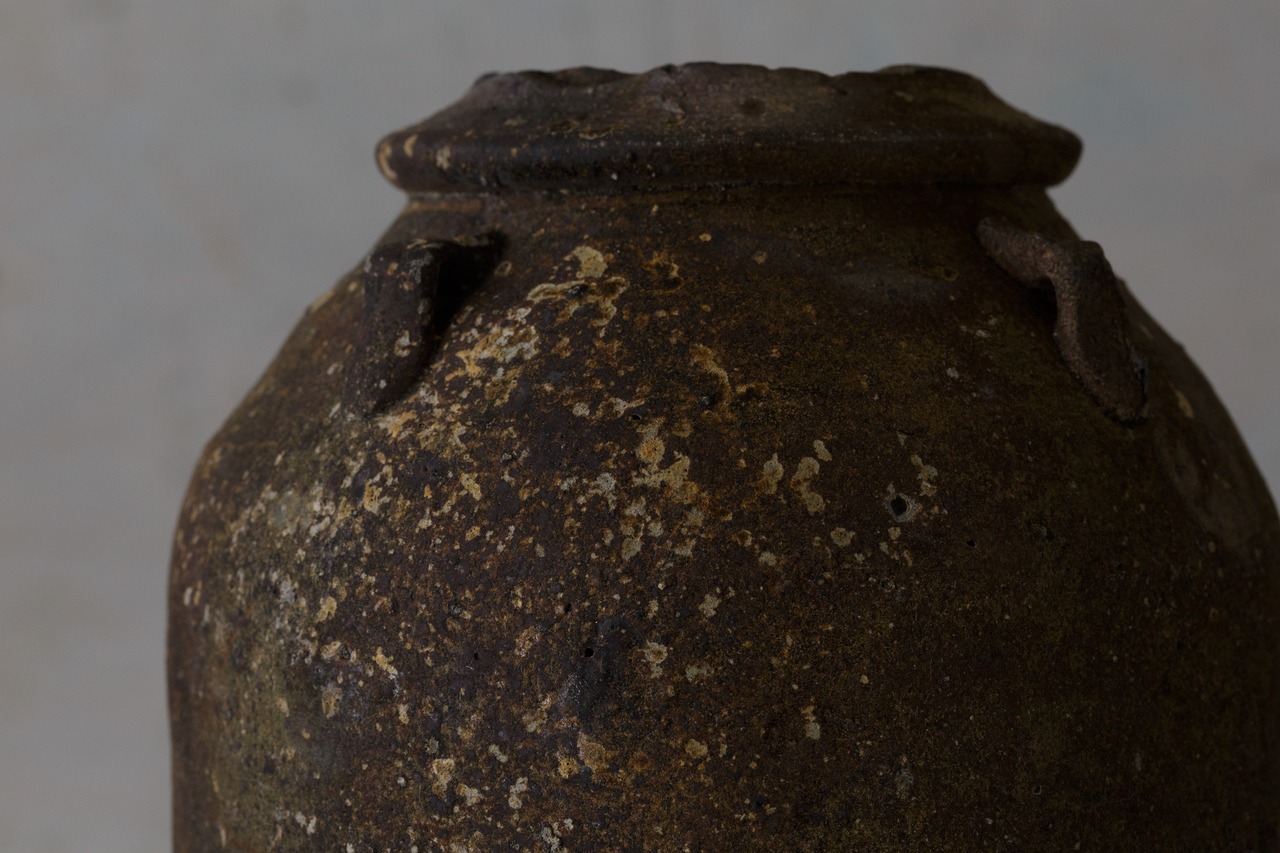
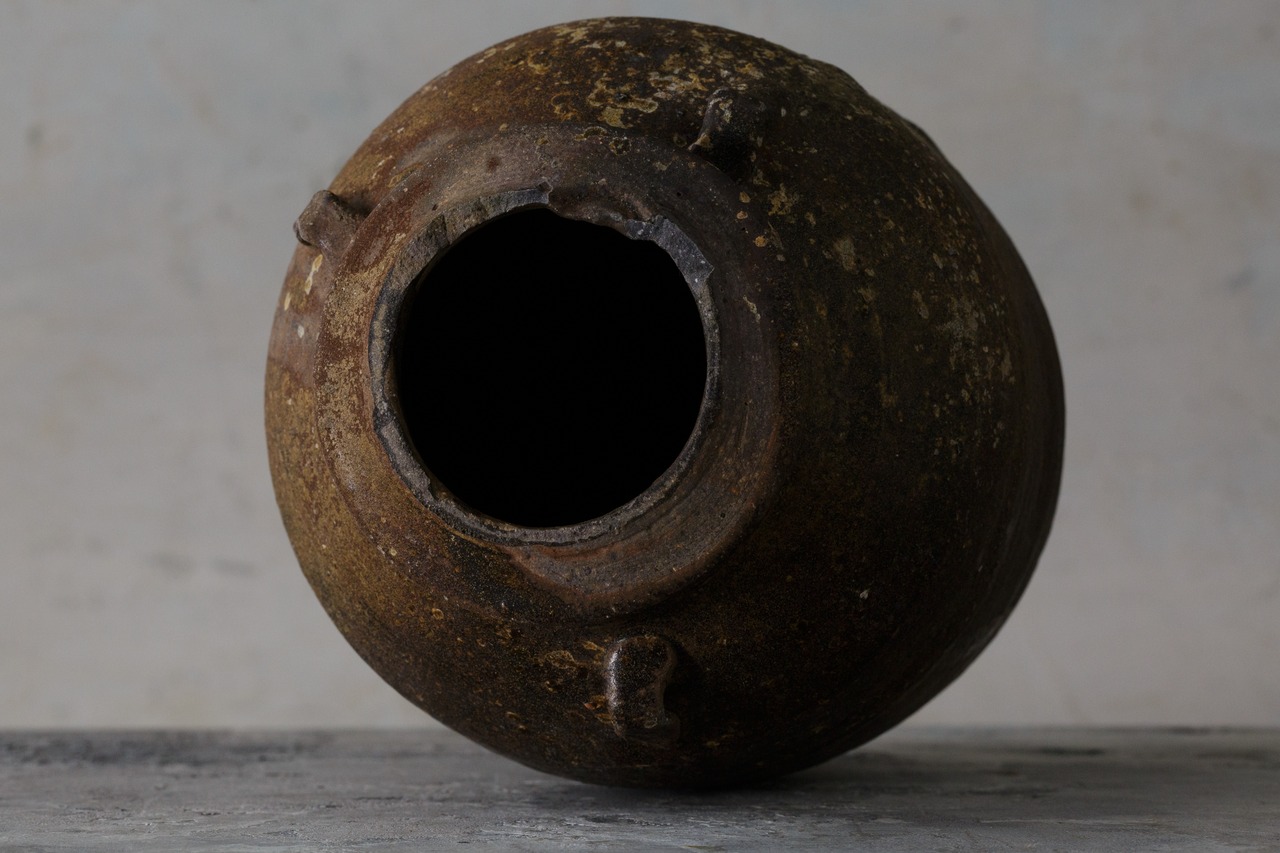
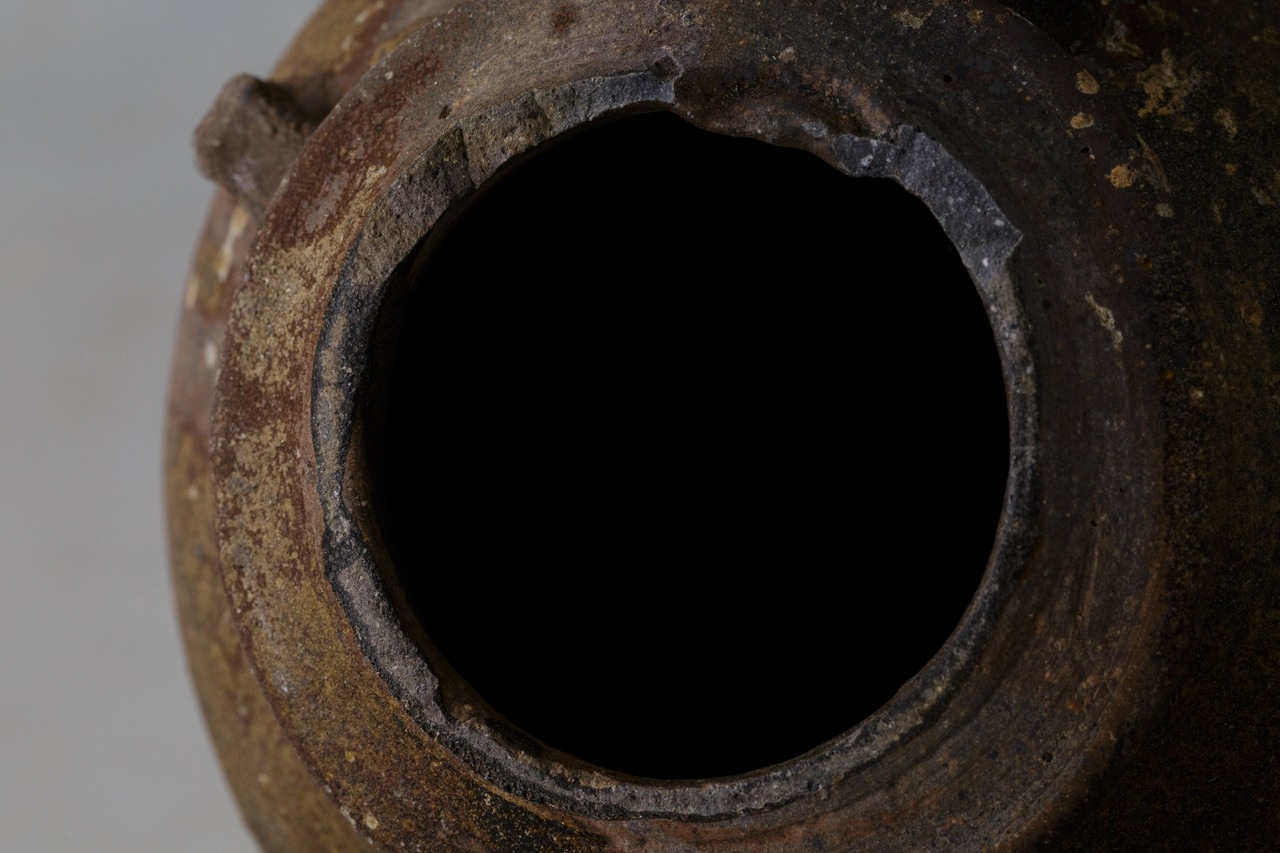
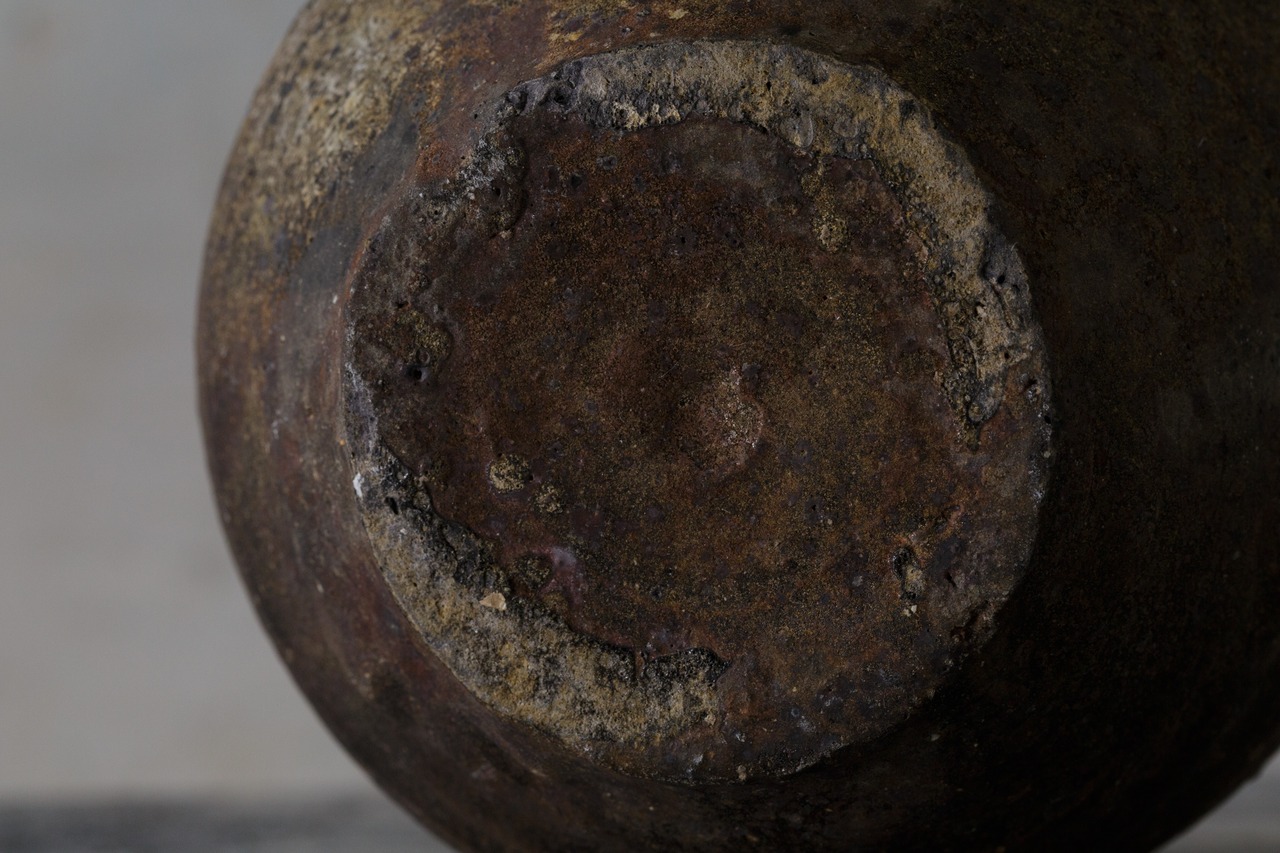
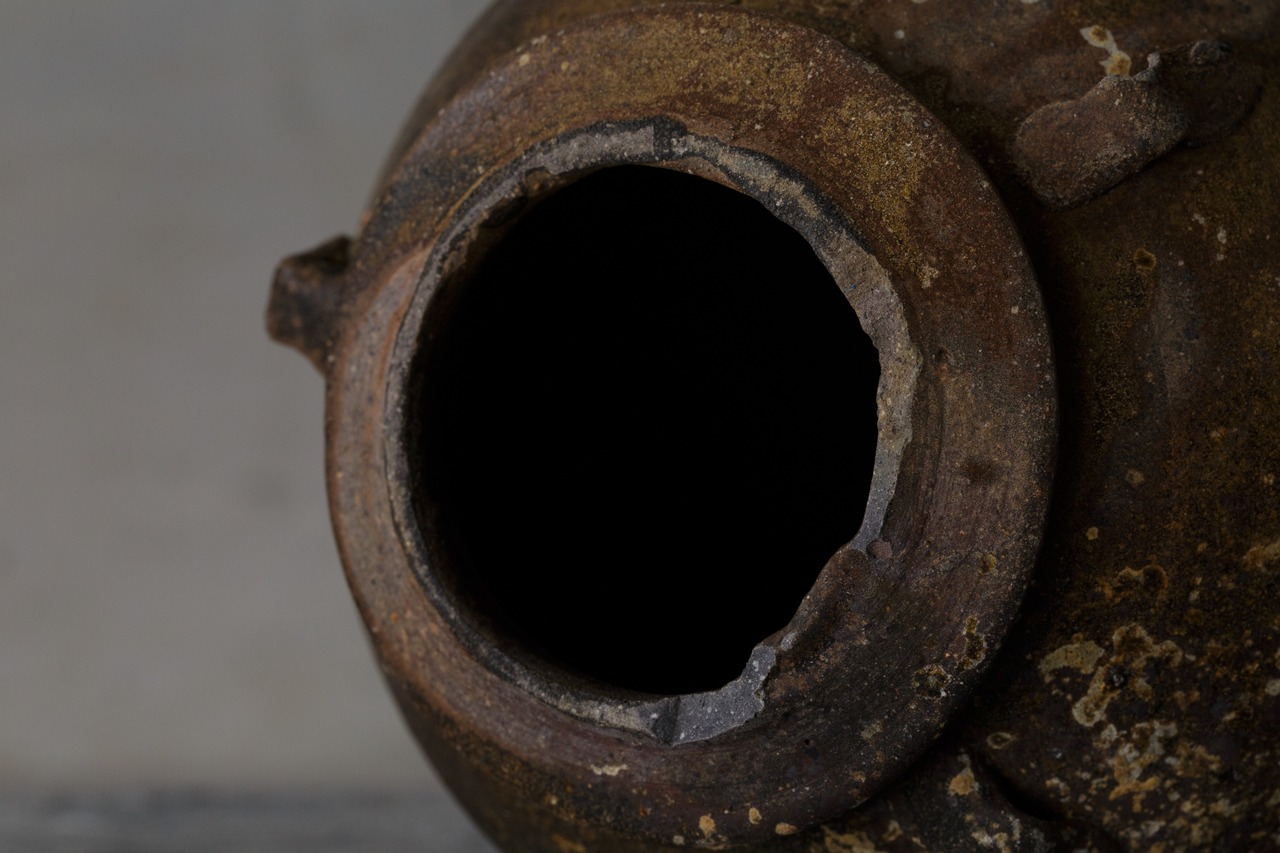
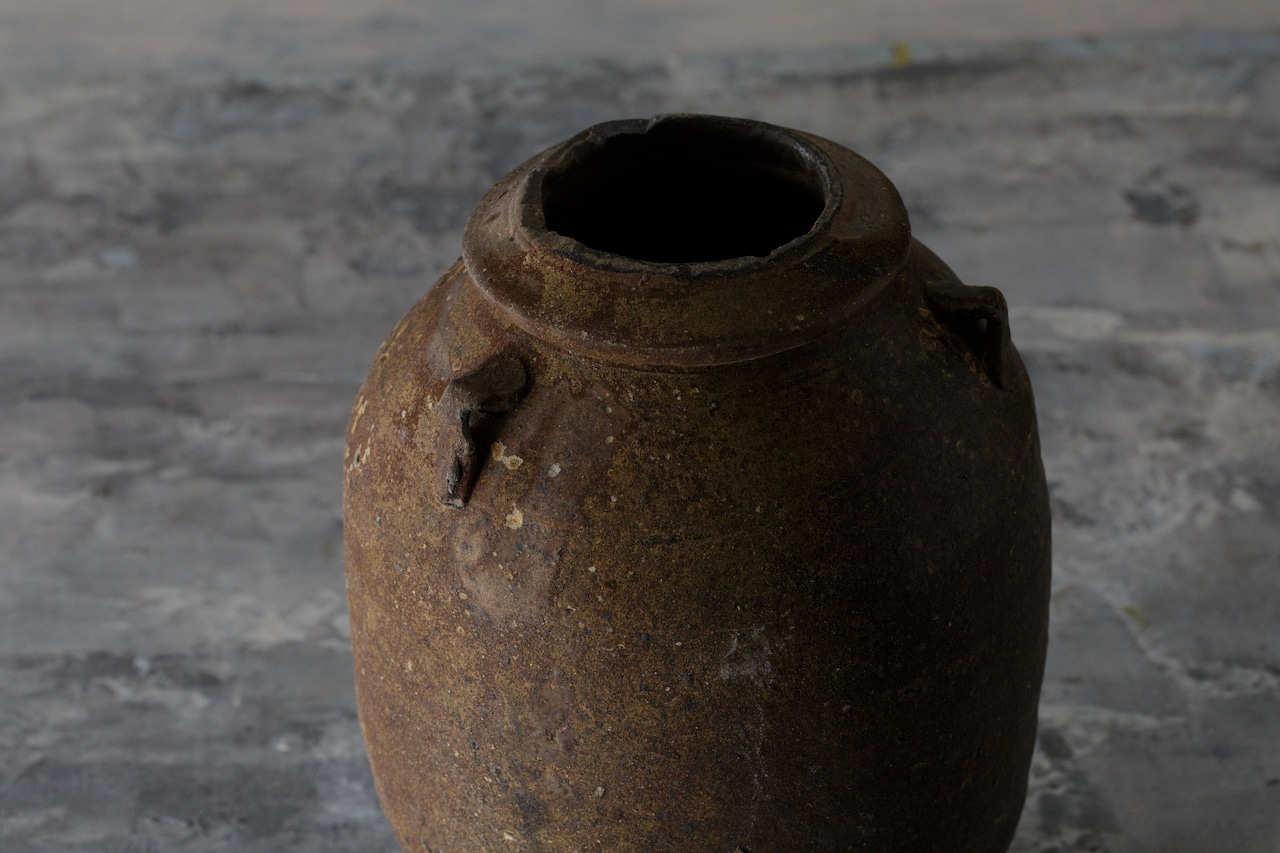
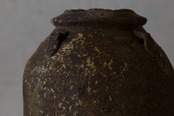
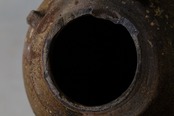
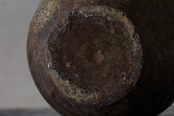
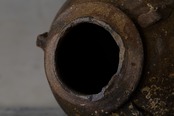
The rim has substantial old chips and losses. There are also scratches, surface wear, stains, deposits, discoloration, firing irregularities, and other signs of considerable age and use. Please carefully review all photographs.
Box: No Box
Size: Diameter 150 mm × Height 210 mm / approx. 5.91 × 8.27 in
Weight: 1,280 g / approx. 2.82 lb
Please note that slight measurement errors may occur.
品名: 古南蛮 焼締三耳壺
製作地: 東南アジアまたは中国南部の可能性あり
様式: 南蛮系/東南アジア系交易陶器
用途: 本来は貯蔵容器と考えられる壺。現在は鑑賞用、コレクション、または落としを使用した花器としてもお楽しみいただけます
素材: 陶器/焼締系炻器
製作年代: 18〜19世紀頃の可能性あり、正確な年代は不明
窯印・銘: 確認できる窯印・作家銘なし
状態: ★★☆☆☆
口縁部に目立つ古い欠け・欠損があります。その他、経年による傷、汚れ、付着物、変色、焼成による表情などが見られます。写真を十分にご確認ください。
箱: 箱無し
サイズ: 直径150mm × 高さ210mm / 約5.91 × 8.27インチ
重量: 1,280g / 約2.82lb
採寸は手作業のため若干の誤差がございます。
Description
This striking old stoneware jar belongs to the broad family of ceramics traditionally described in Japan as Nanban ware.
The term “Nanban” does not identify one specific kiln or country. In the context of Japanese tea culture and antique ceramics, it has long been used for various high fired vessels associated particularly with Southeast Asia and neighboring regions. Archaeological evidence in Japan includes imported storage jars originating from areas such as Thailand, Vietnam, and Myanmar, including examples with multiple lugs around the shoulder. 大分市公式サイト
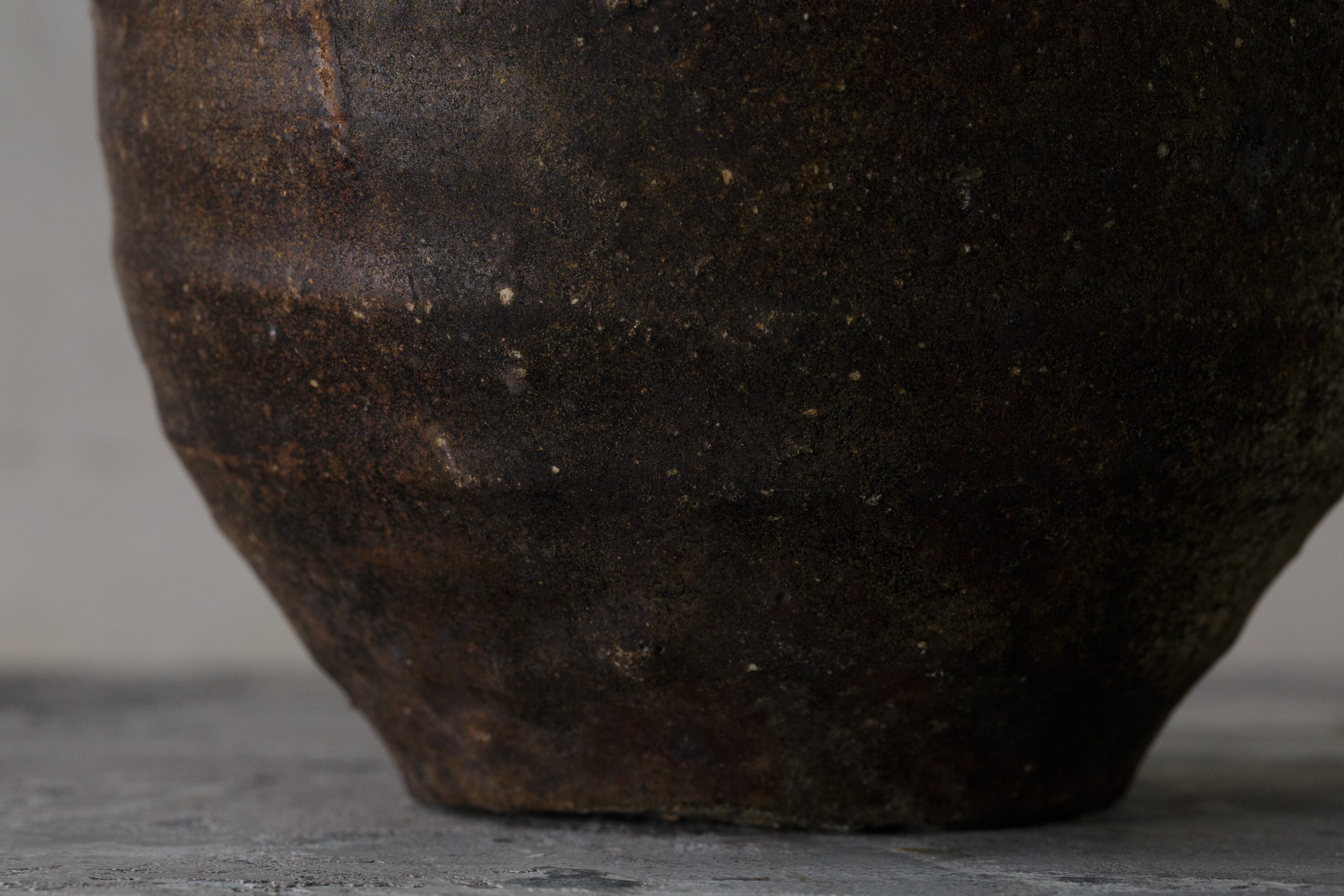
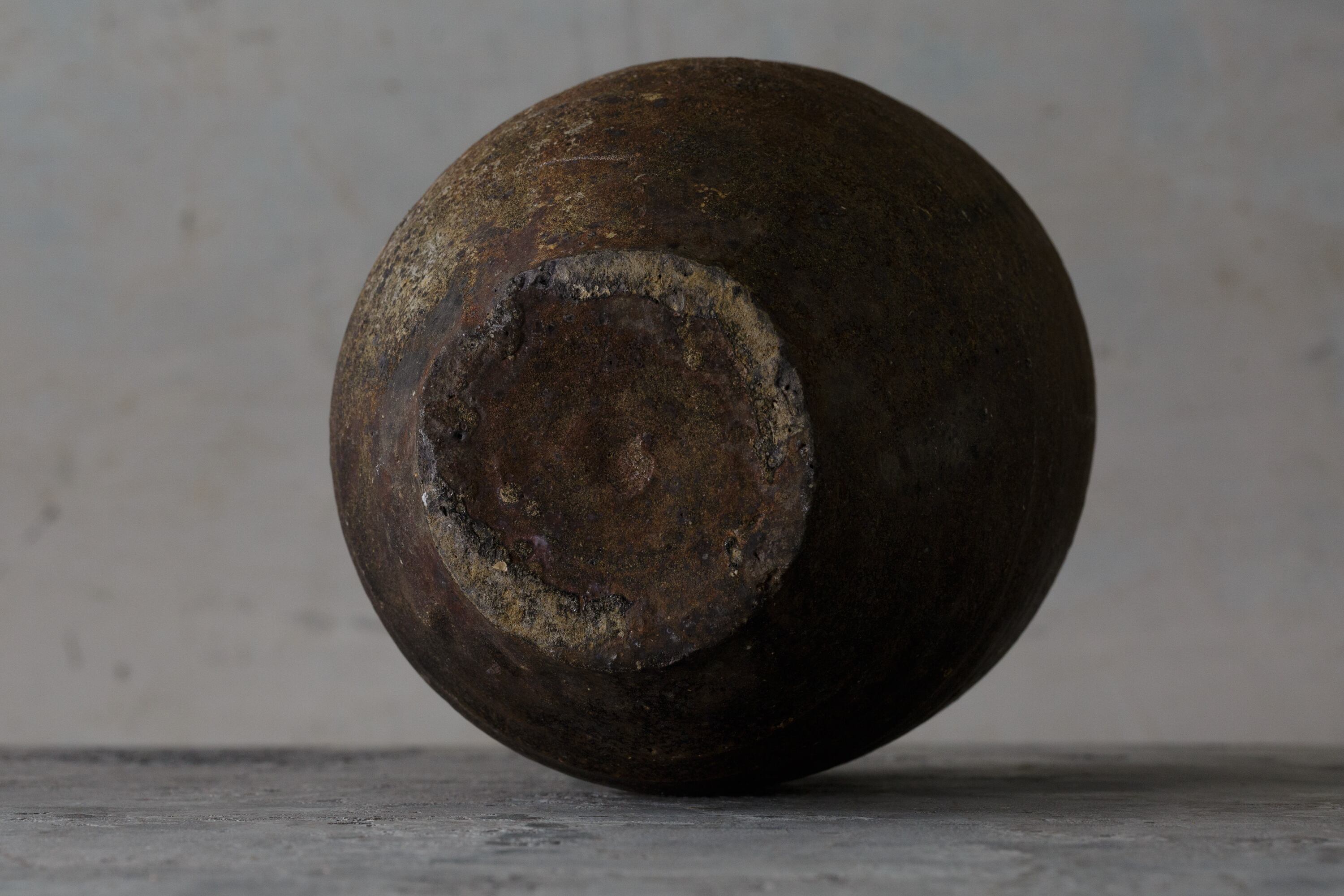
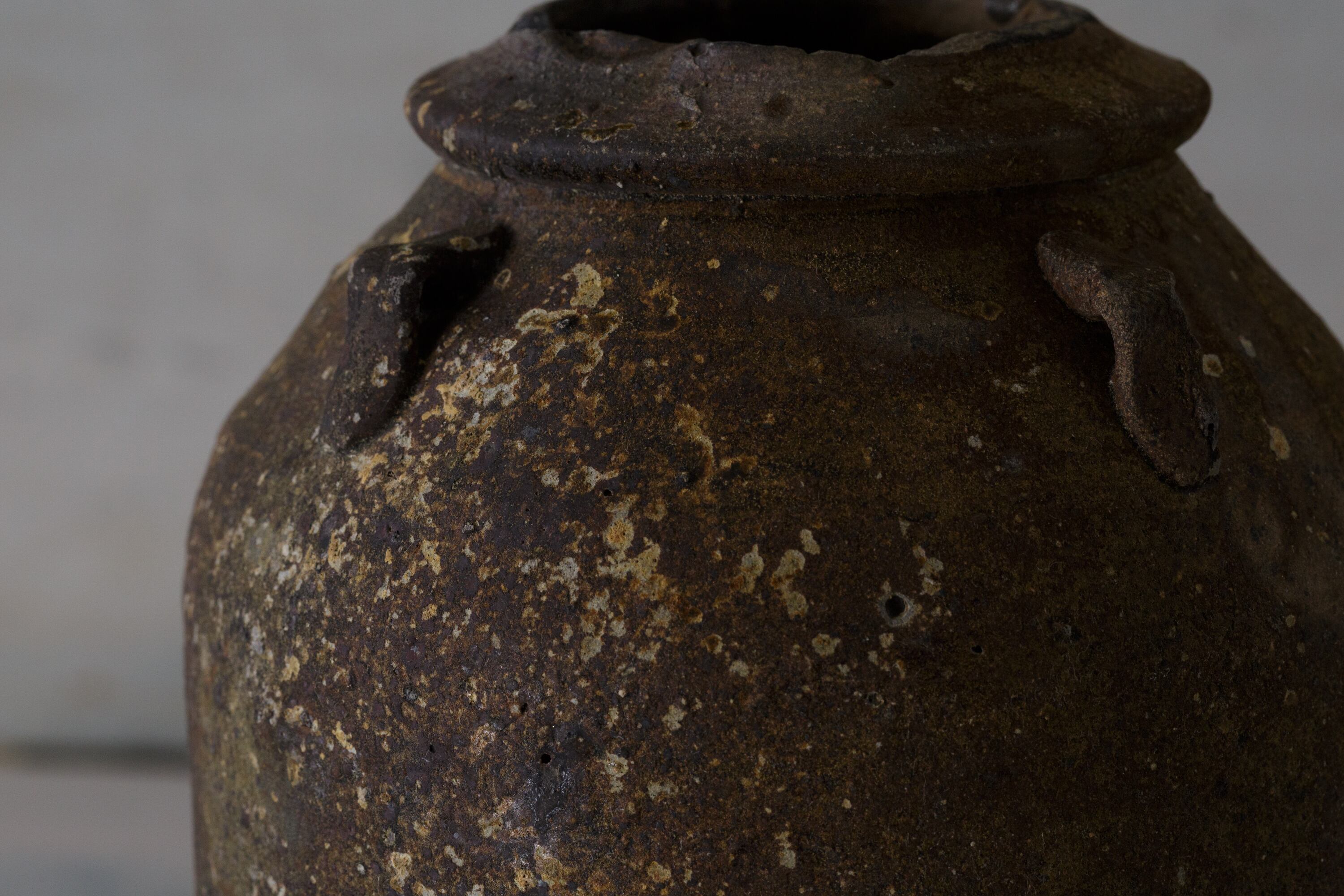
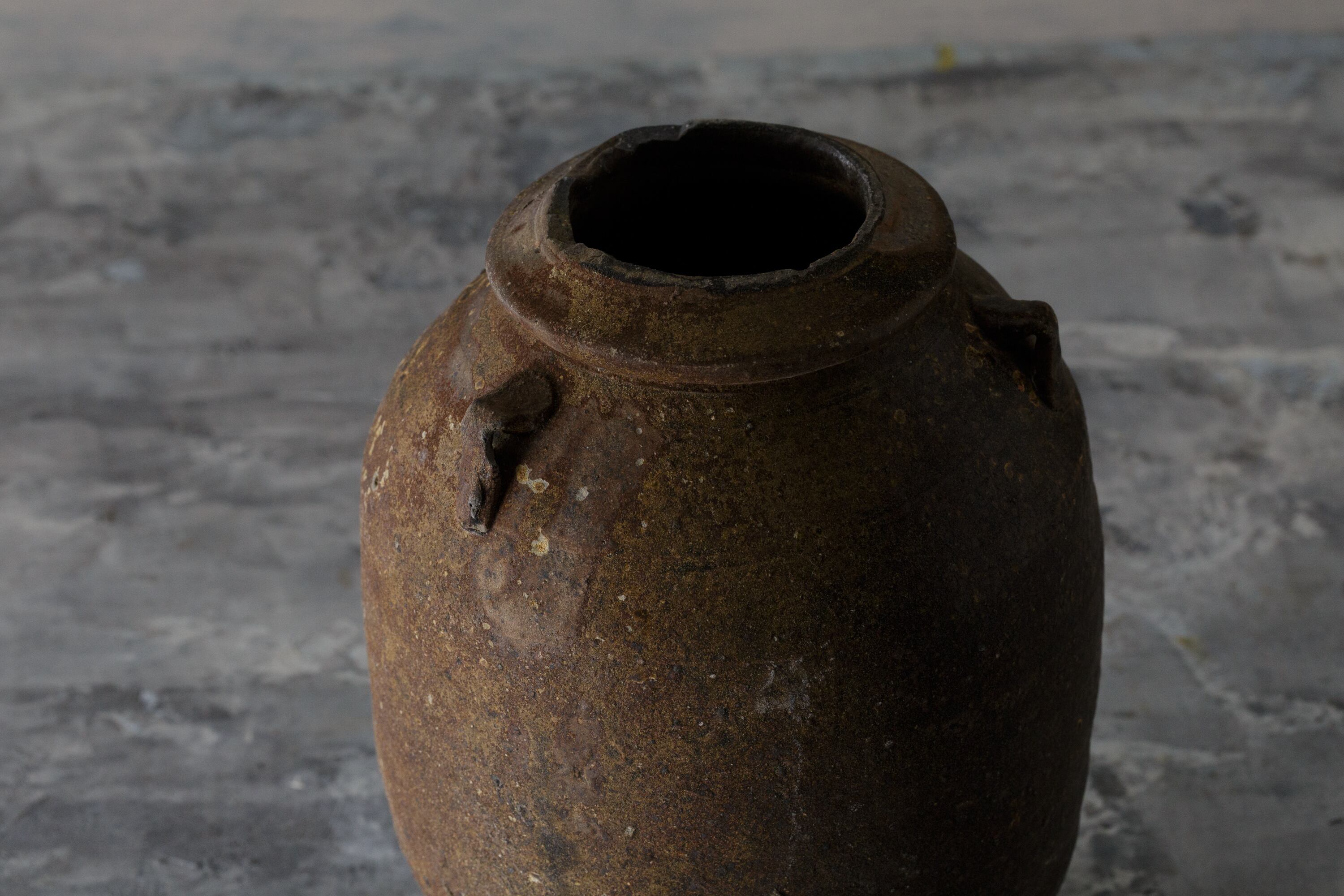
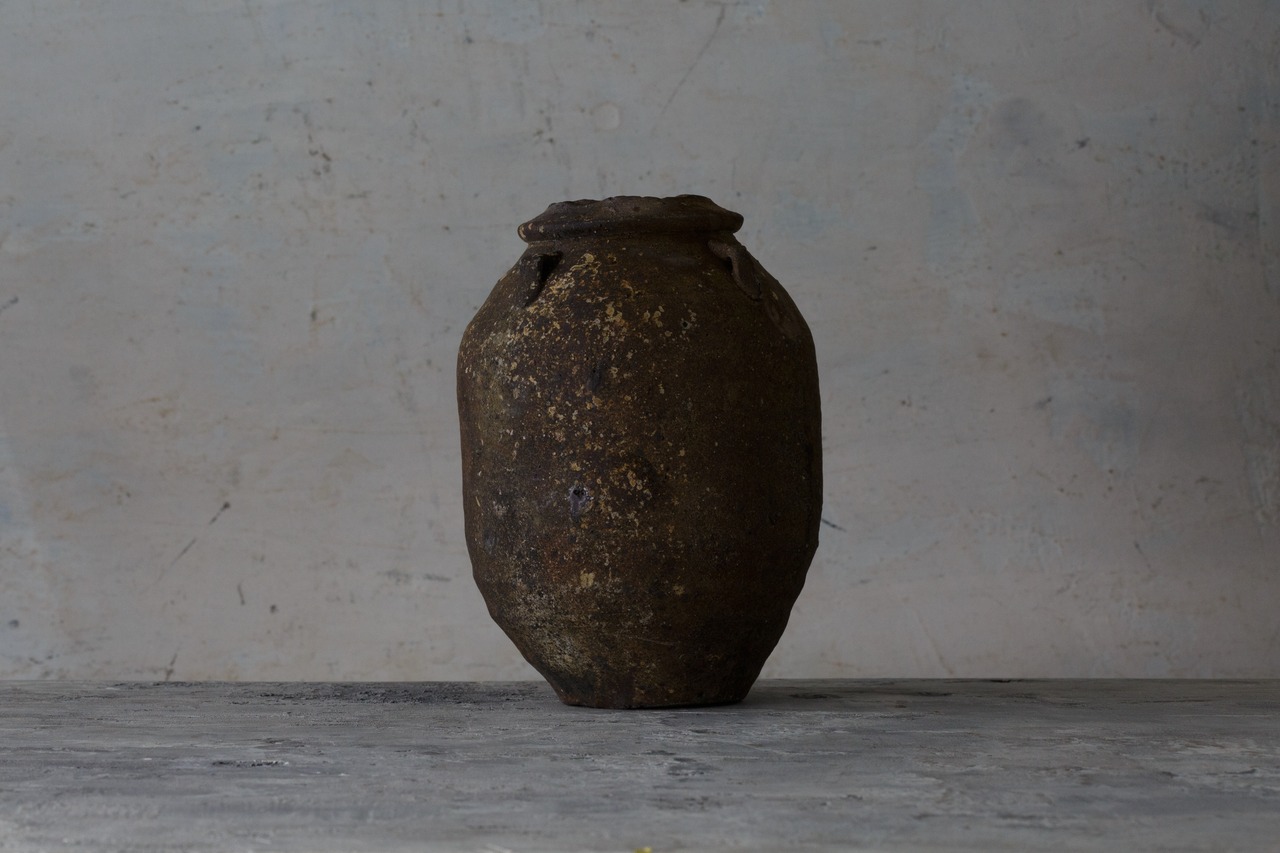
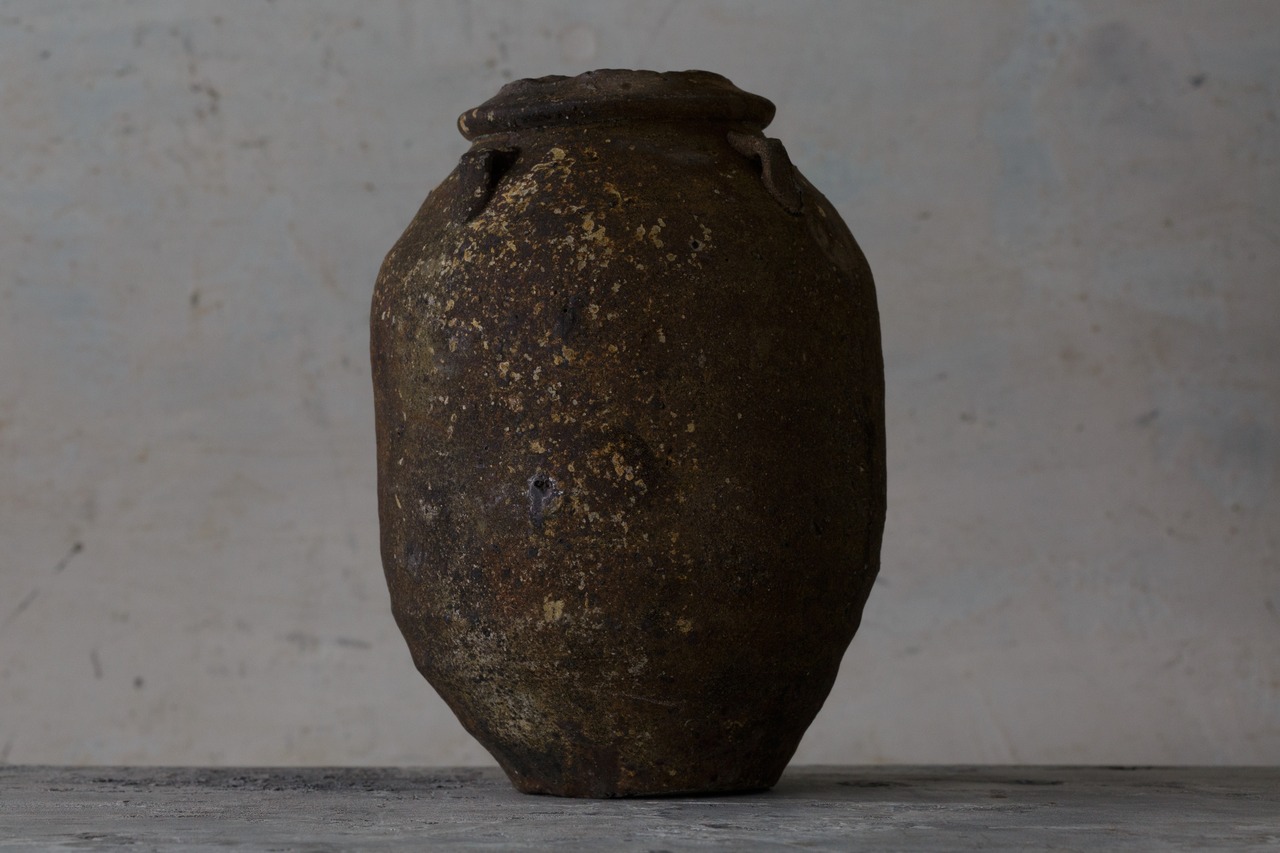
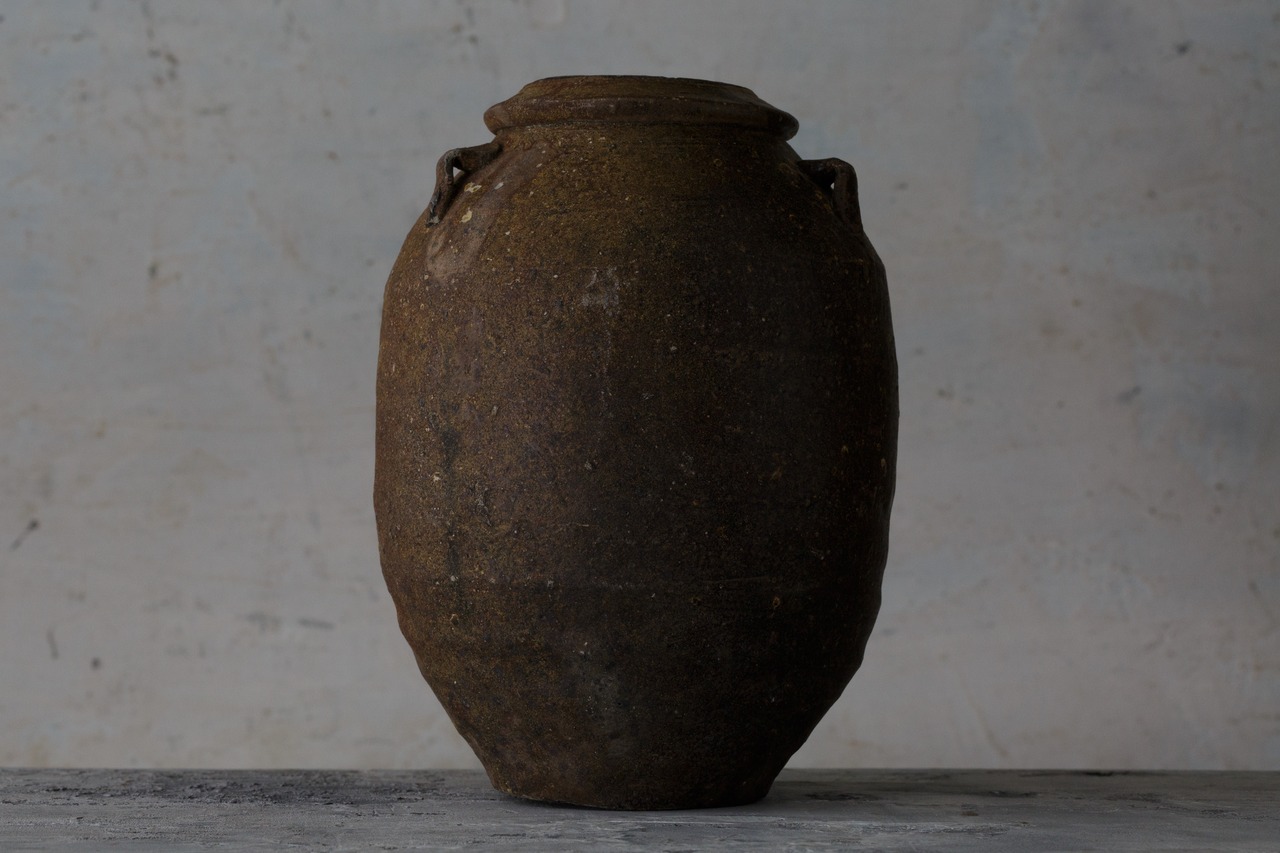
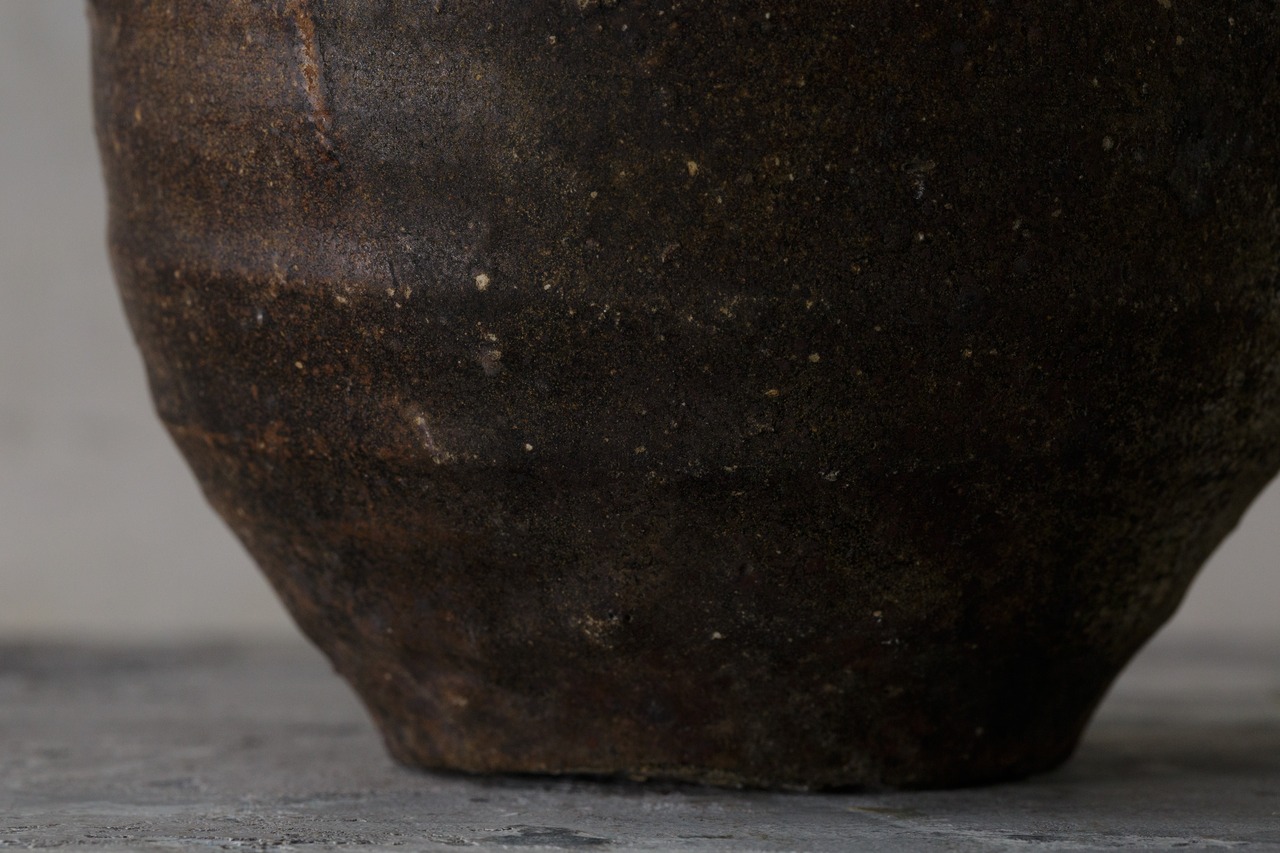
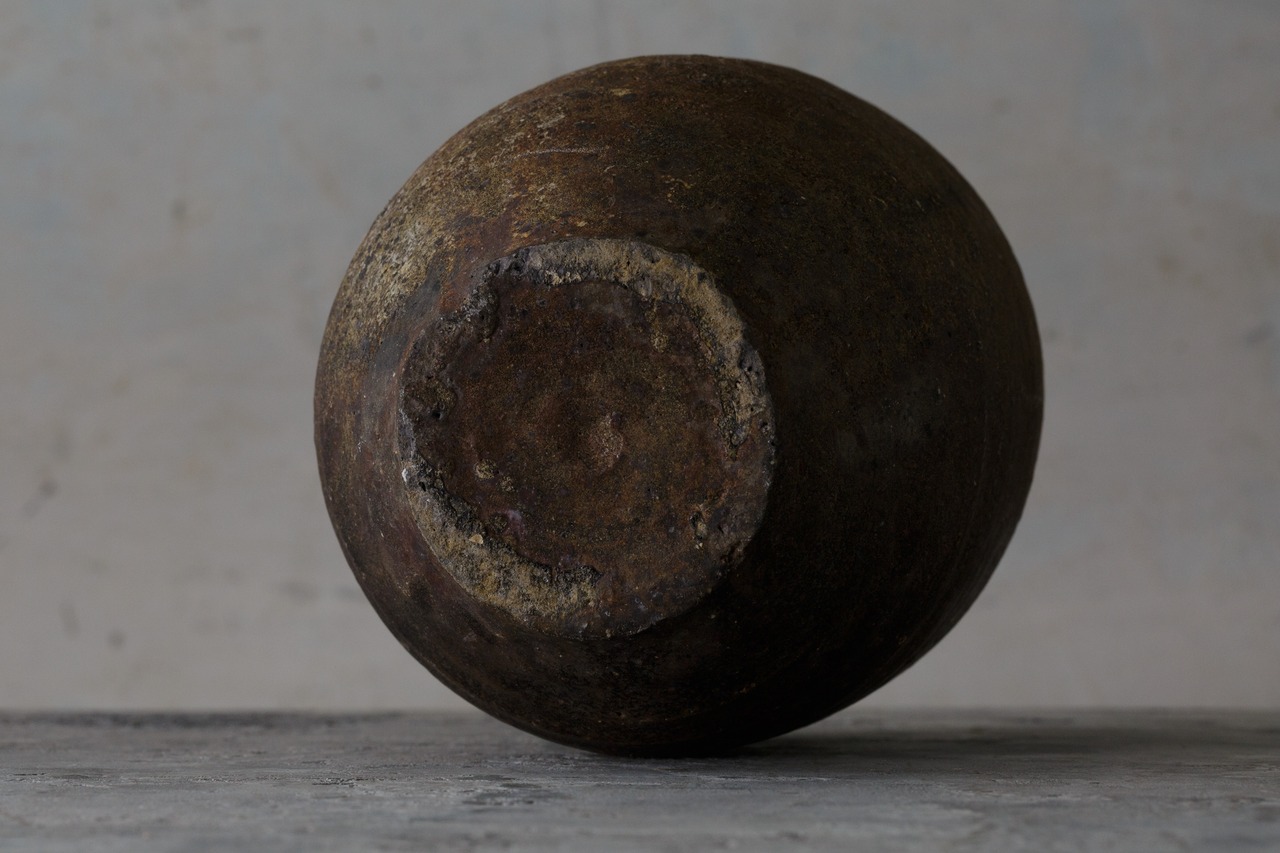
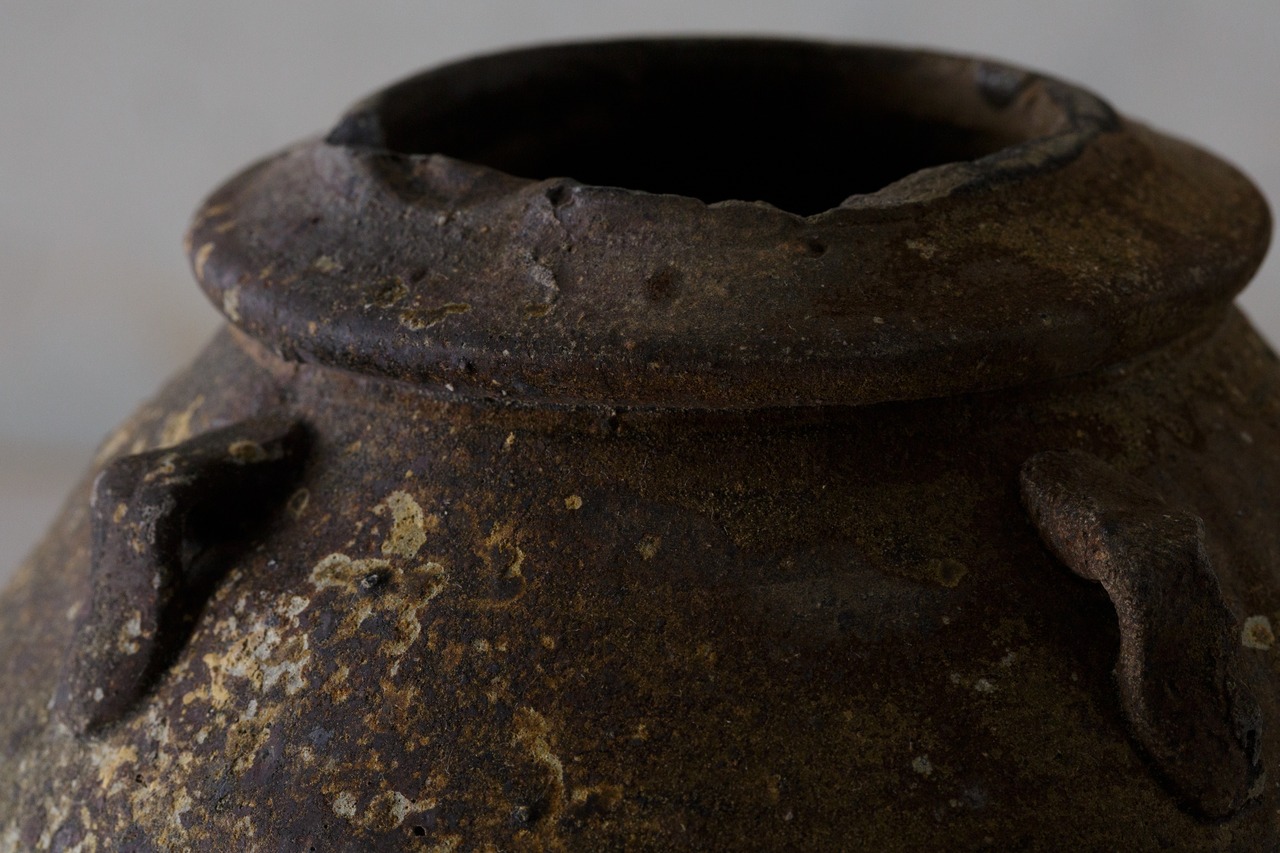
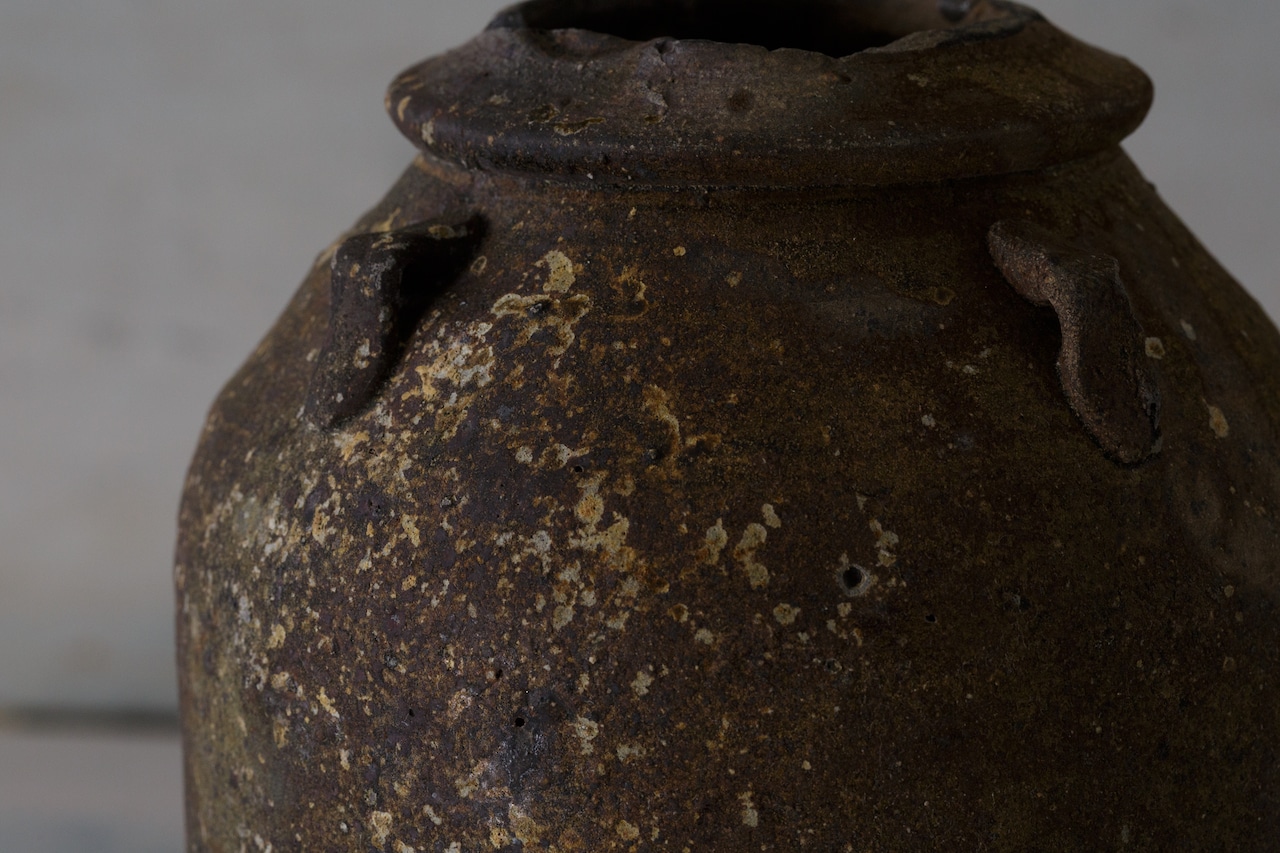
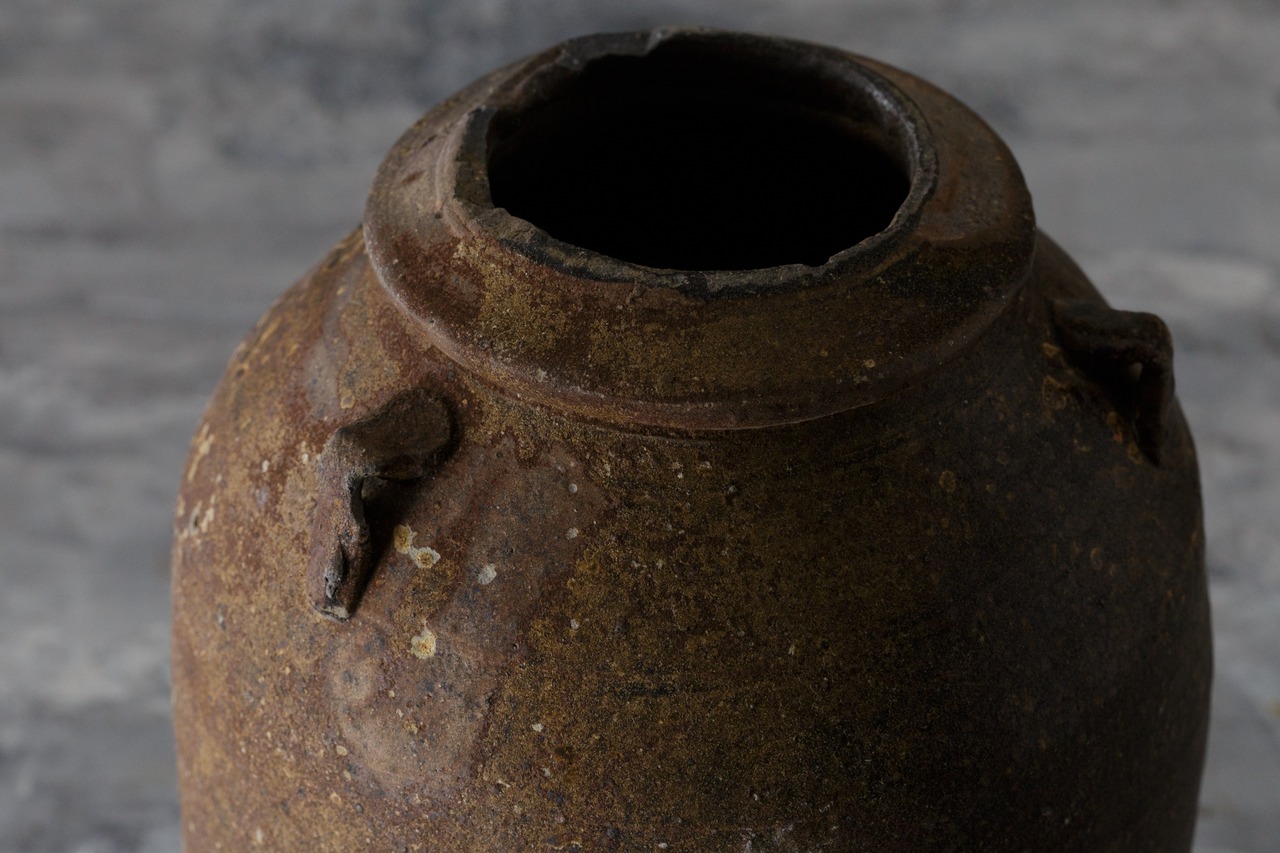
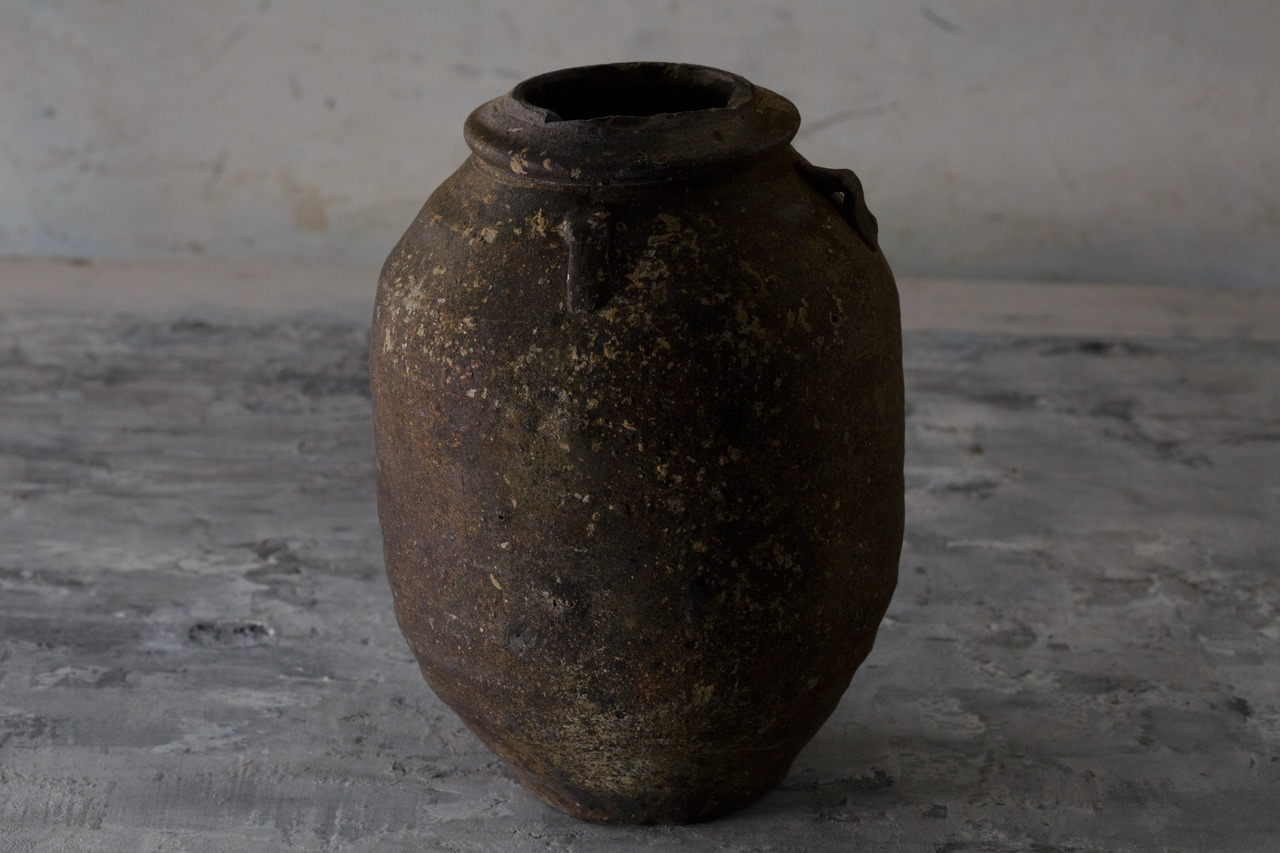
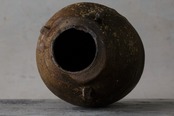
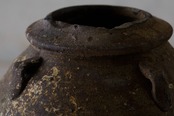
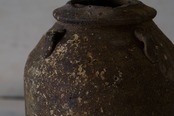
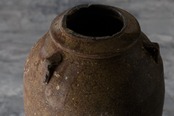
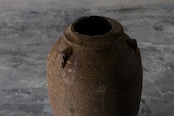
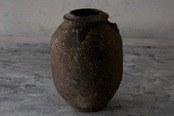
This jar has a compact yet powerful form, rising from a relatively narrow base into a full rounded body before contracting toward the short neck. Three small applied lugs are arranged around the shoulder, a functional feature historically associated with storage and transport vessels.
Its greatest attraction is the surface.
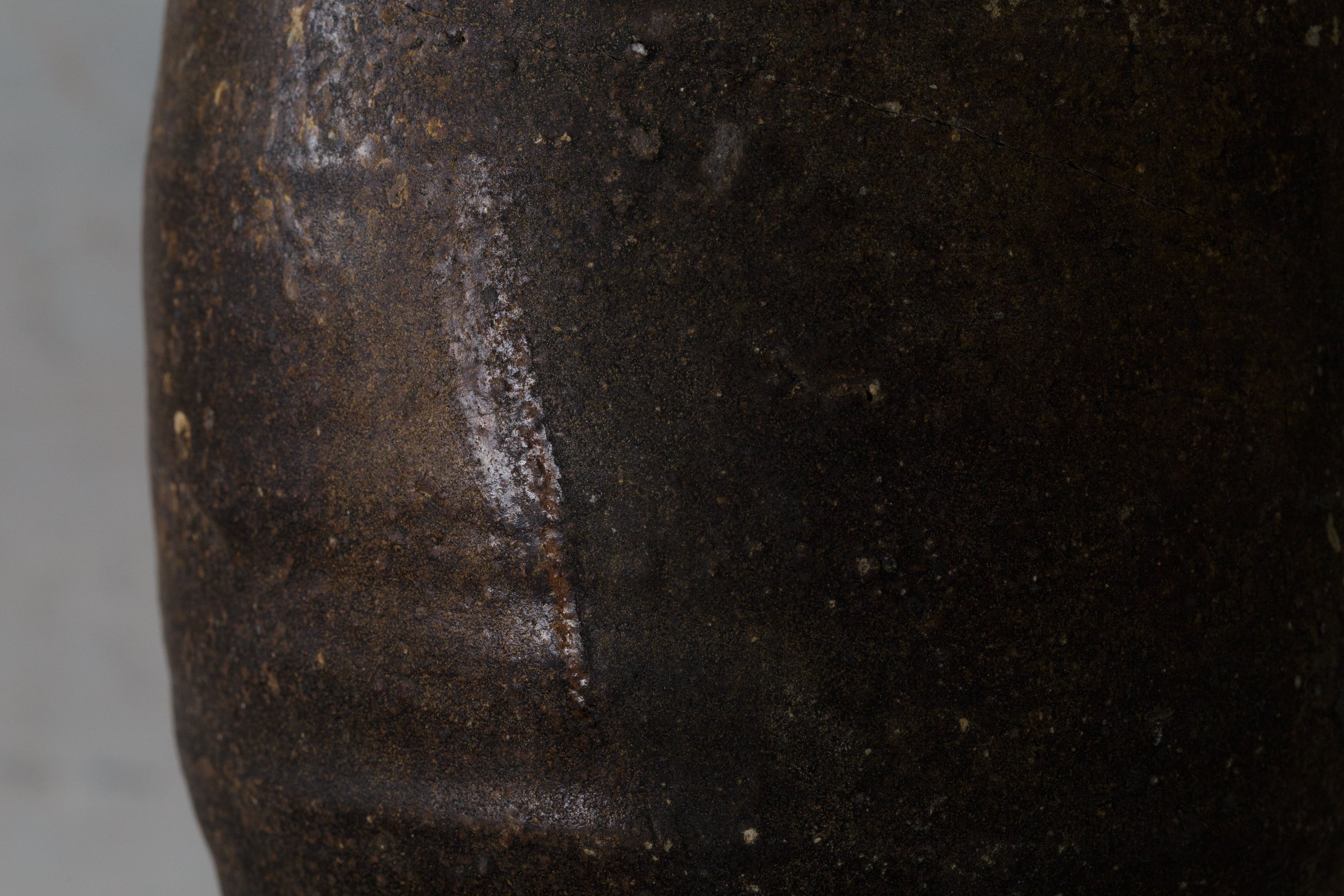
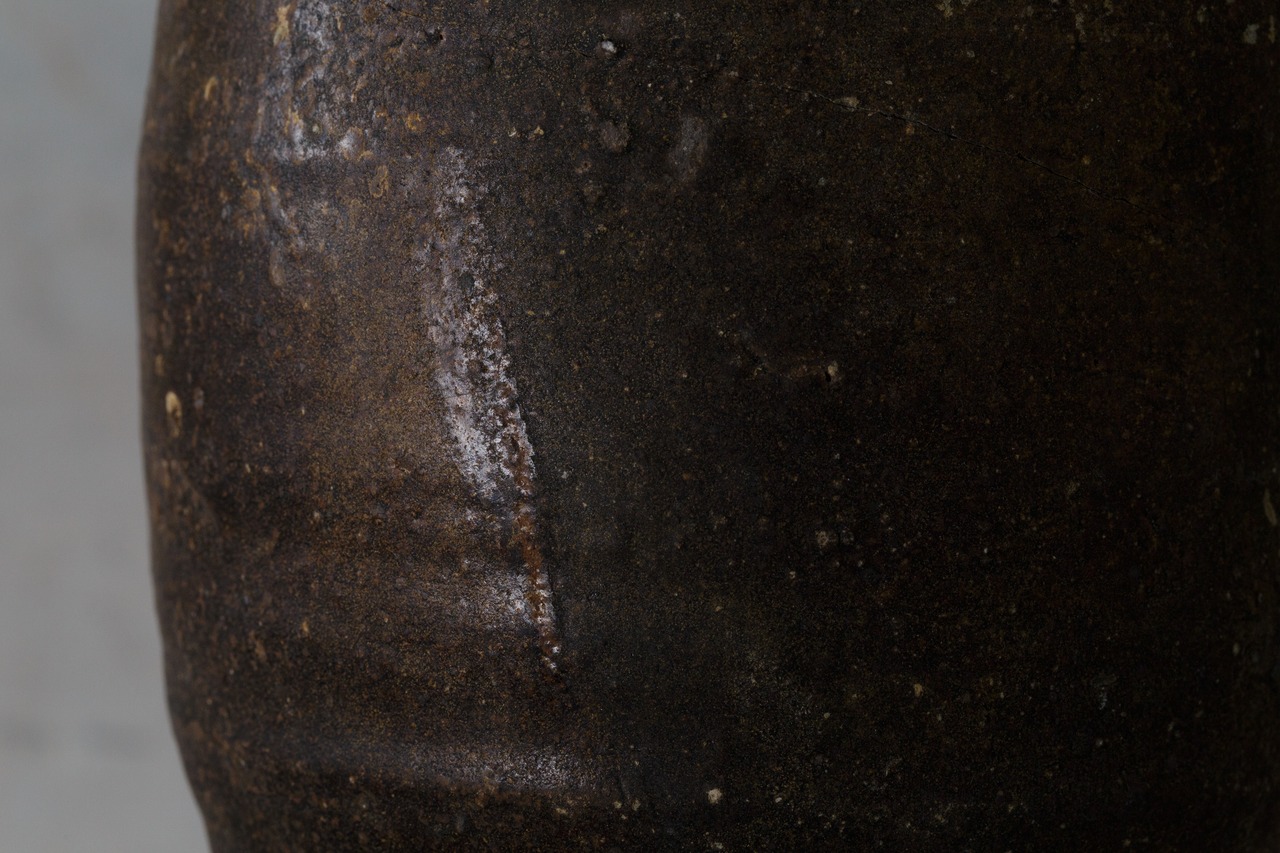
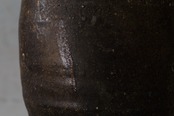
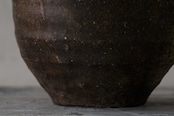
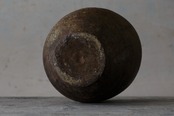
The body has developed a deep range of dark brown, blackish brown, reddish brown, ochre, and earthy tones. Scattered pale deposits and firing effects create an irregular landscape across the surface. Rather than a deliberately decorative object, its beauty comes from the material itself — clay, firing, use, weathering, and considerable time.
The thickened mouth gives the vessel considerable visual weight. Large portions of the rim are chipped and missing, clearly visible in the photographs. These losses are an important part of the condition and are reflected in the ★★☆☆☆ rating.
No identifiable kiln mark or signature is visible.
Based on its form, dark fired body, applied shoulder lugs, and overall surface character, the piece is consistent with the broad tradition generally classified as Nanban or Southeast Asian trade stoneware. However, without archaeological provenance, documentation, or an identifiable kiln mark, the exact country, kiln, and production date cannot be conclusively determined.
For this reason, the attribution to Southeast Asia or Southern China and the proposed 18th–19th century dating should be regarded as an informed estimate rather than a definitive identification.
The uncertainty itself is part of the character of such old utilitarian ceramics. Originally created as a practical vessel rather than an art object, it now possesses a strong sculptural presence. Its restrained silhouette and deeply aged surface work particularly well in Wabi Sabi, Japandi, rustic, and minimalist interiors.
It can be displayed as an antique object in its own right or used as a flower vessel with a separate waterproof inner container.
A compelling old ceramic vessel for collectors who appreciate the beauty of anonymous craftsmanship, natural firing, wear, and the passage of time.
Authentic antique sourced in Japan and shipped directly from Japan.
商品説明
この壺は、日本で古くから「南蛮物」「南蛮焼締」と呼ばれてきた古陶の系譜を感じさせる、力強い三耳壺です。
「南蛮」という言葉は特定の一つの窯や国を意味するものではありません。日本の茶陶や古美術の世界では、東南アジアを中心とした地域からもたらされた焼締陶器などを広く南蛮物として捉えてきた歴史があります。日本国内の考古資料からも、タイ、ベトナム、ミャンマーなどで作られた貯蔵用の焼締壺が確認されており、肩部に複数の耳を備えた壺も知られています。大分市公式サイト
本品は比較的小さく締まった底部から胴が大きく膨らみ、肩から短い頸部へと収束する、量感のある器形をしています。肩部には三つの小さな耳が取り付けられています。
最大の魅力は、その表面です。
黒褐色、焦茶、赤褐色、黄褐色などが複雑に重なり、ところどころに淡い色の付着や焼成による斑状の景色が現れています。意図的な装飾による美しさというより、土、炎、使用、風化、そして長い年月そのものが器肌を形成したような表情です。
厚く作られた口縁には大きな欠け・欠損が複数あります。これは写真でも明確に確認できるため、本品の状態評価を★★☆☆☆としています。
確認できる窯印や作家銘はありません。
器形、暗褐色の焼締肌、肩部の三耳、全体の焼成表情などから、広義の南蛮系、あるいは東南アジア系交易陶器の特徴を持つ作品と考えられます。しかし、伝来資料や発掘情報、明確な窯印などが存在しないため、製作国、窯、年代を完全に特定することはできません。
そのため、本商品では東南アジアまたは中国南部の可能性、年代については18〜19世紀頃の可能性として紹介しています。
本来は美術品としてではなく、液体や食料などを保存・運搬するための日常的な容器として作られた可能性があります。そうした無名の生活道具が長い年月を経ることで、現在では非常に彫刻的な存在感を持つ器となっています。
侘び寂び、Japandi、古民家、ミニマルな空間との相性もよく、そのままオブジェとして飾るほか、防水性のある落としを内部に使用することで花器として楽しむこともできます。
作者や窯の名ではなく、土と炎、使用の痕跡、そして時間そのものが生み出した景色を楽しんでいただきたい古陶です。
Promotional Tags
Nanban Jar 南蛮壺
Antique Jar 古壺
Three Lug Jar 三耳壺
Asian Antique アジア古美術
Old Stoneware 古焼締陶器
Wabi Sabi 侘び寂び
Japandi Decor ジャパンディ
Rustic Decor ラスティック装飾
Primitive Art プリミティブアート
Old Pottery 古陶器
Flower Vessel 花器
Collectible コレクション
Asian Pottery アジア陶器
Material & Technique Tags
Stoneware 炻器
Fired Clay 焼成陶土
High Fired 高温焼成
Unglazed Clay 無釉陶土
Natural Firing 自然焼成
Kiln Fired 窯焼成
Applied Lugs 貼付耳
Hand Formed 手仕事成形
Dark Firing 暗色焼成
Iron Rich Clay 鉄分を含む土
Firing Marks 焼成痕
Surface Patina 古色表面
Clay Texture 土肌質感
-
レビュー
(5)